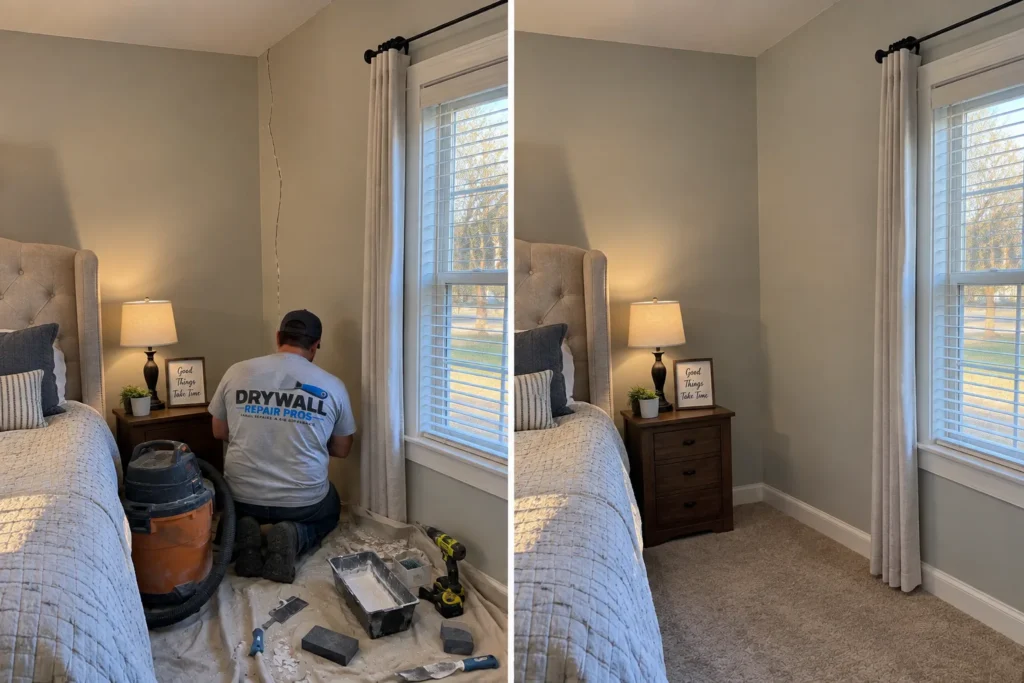
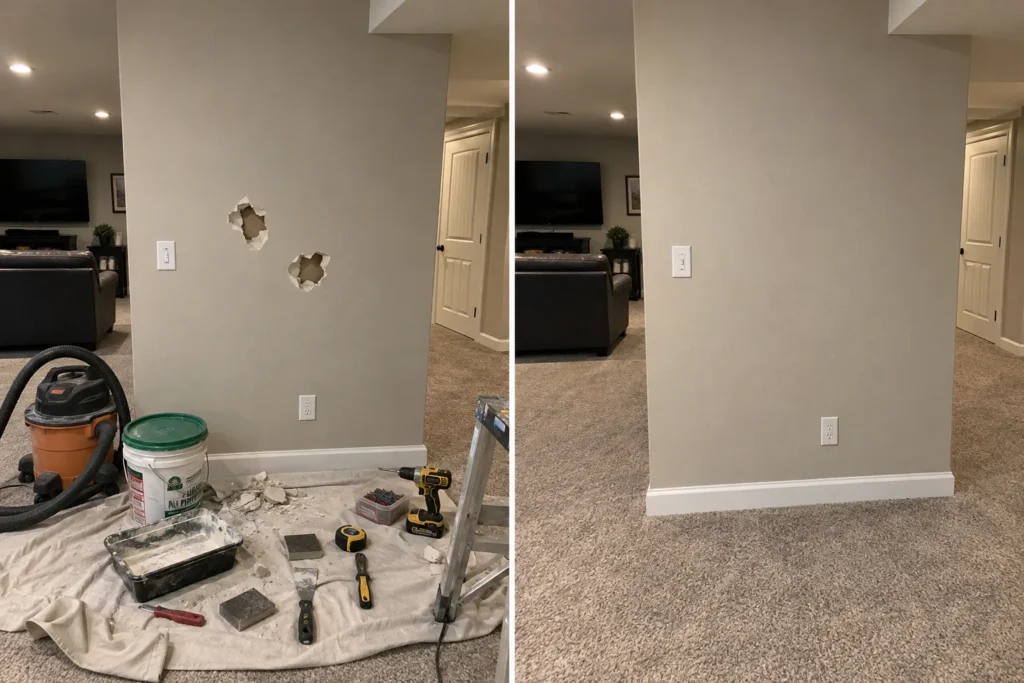
Can Damaged Drywall Be Repaired?
Often, yes. Drywall is designed in a way that allows localized sections to be patched, reinforced, refinished, or replaced without automatically replacing an entire wall or ceiling. The correct choice depends on the condition of the board and the material around the damaged area.
When a Localized Patch May Make Sense
- A defined hole with sound surrounding drywall
- Minor impact damage
- Openings left after completed plumbing or electrical access
- Localized cracks where the surrounding material remains serviceable
- Small failed patches that can be removed back to sound material
- Limited corner or fastener damage
When Replacement of a Section Becomes More Likely
- Drywall is soft, swollen, crumbling, or badly delaminated
- Water damage extends beyond the visible surface
- A ceiling section is sagging or no longer securely supported
- The opening is too large or irregular for a reliable surface-only repair
- Previous repairs have left weak or unstable material
- The board has been repeatedly damaged in the same area
Repair Does Not Mean Smearing Compound Over Damage
A proper repair may still include cutting material back, adding backing, installing a new drywall piece, taping joints, applying multiple finish coats, sanding, and restoring texture. 'Repair' describes the goal; it does not mean every defect receives the same patch method.
What About an Entire Wall or Ceiling?
Widespread deterioration, extensive water exposure, large remodel changes, or broad surface failure can change the economics of localized repair. The repair boundary should follow the material condition rather than an arbitrary square-foot rule.
How Photos Help
Show the full wall or ceiling, the damaged area, close-up edges, any sagging or staining, and approximate dimensions. Send photos of the damaged area, the property address, and a short description of what happened. Clear wide, medium, and close-up photos can often provide enough information to establish an initial repair scope without adding an unnecessary first visit.
Repair, Patch, Selective Replacement & Full Replacement Are Different Decisions
The choice is not limited to “smear compound over it” or “replace the entire wall.” Many repairs involve selective replacement: damaged material is cut back to a sound boundary, a new piece is installed, joints are finished, and the surrounding surface is blended. That is still a drywall repair even though new board is used locally.
Questions That Help Define the Boundary
- Is the surrounding drywall firm?
- Is the paper intact enough to finish?
- Was water involved?
- Is the area dry?
- Does the board move or sag?
- Has the same area failed repeatedly?
- Is there backing or framing available?
- Will the opening need future access?
- Is the damage localized or spread across a broad surface?
Frequently Asked Questions
Do I need to replace a whole sheet for one hole?
Not necessarily. Localized patching or selective replacement may be practical when surrounding material is sound.
Can soft drywall be patched?
Soft or weakened material may need removal back to sound drywall before finishing.
Can sagging ceiling drywall be repaired?
Sometimes, but the support, fastening, moisture history, and board condition need to be understood first.
Can an old failed patch be repaired again?
Often, but weak or poorly bonded material may need to be removed before rebuilding the transition.
Does texture affect the repair-vs-replace decision?
Texture affects the finishing and blend strategy, but the material condition determines the repair boundary.