
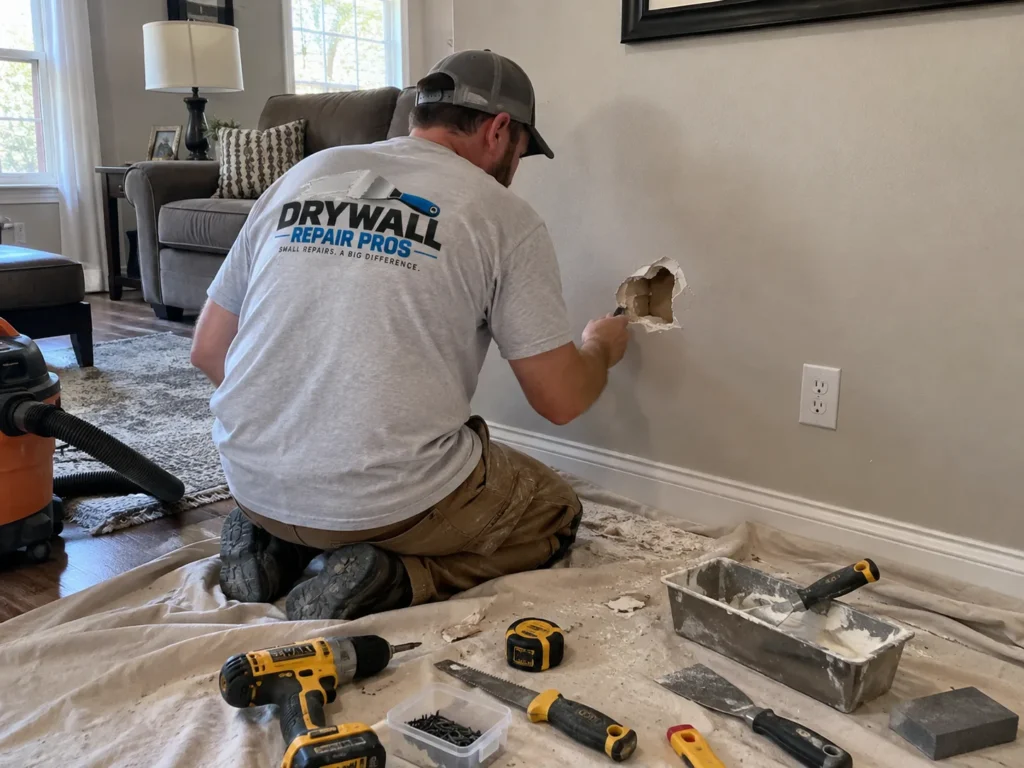
Professional Drywall Hole Repair in Cedar Rapids & Iowa City
A hole in drywall can come from a doorknob impact, furniture, a removed TV mount, plumbing or electrical access, remodeling, or a larger section of damaged wall or ceiling. Whatever caused it, the repair should restore a stable surface and make the damaged area blend naturally with the surrounding drywall.
Drywall Repair Pros provides professional drywall hole repair for homes, rental properties, apartments, and commercial interiors throughout Cedar Rapids, Iowa City, and surrounding communities. We repair small holes, large openings, punctures, cutouts, access holes, impact damage, and missing sections of drywall using methods appropriate for the size, location, and condition of the damage.
Larger holes may require backing, replacement drywall, joint tape, multiple finishing stages, and careful feathering. Smaller holes may need only localized preparation and finishing. The goal is the same: repair the damage without replacing more drywall than necessary.
Get a Fast Quote From Photos
Most drywall hole repairs can be evaluated and quoted without scheduling a separate in-person estimate. Upload a few clear photos, include the approximate width and height of the damaged area, tell us whether it is on a wall or ceiling, and provide any useful details about what caused it.
In most cases, that gives us enough information to understand the repair and prepare pricing. Quotes can often be provided the same day, so you can move from damaged drywall to a clear repair plan without waiting for an estimate appointment.
Drywall Hole Repair for Walls & Ceilings
Drywall holes vary in size, shape, location, and cause. Some are small punctures that can be repaired locally. Others involve broken or missing material that needs to be cut back to stable drywall before a replacement section is installed.
We commonly repair drywall holes caused by:
- Doorknob, furniture, and accidental impacts
- Moving damage and household punctures
- Removed wall anchors, screws, brackets, and fixtures
- Wall-mounted TVs, shelving, cabinets, and mirrors
- Plumbing, electrical, HVAC, and inspection access
- Remodeling work and removed vents, outlets, or switches
- Ceiling access or damaged ceiling sections
- Previous drywall patches that failed or remain visible
The objective is not simply to close an opening. A proper repair restores support, rebuilds the damaged surface where necessary, and creates a finished transition into the surrounding wall or ceiling.
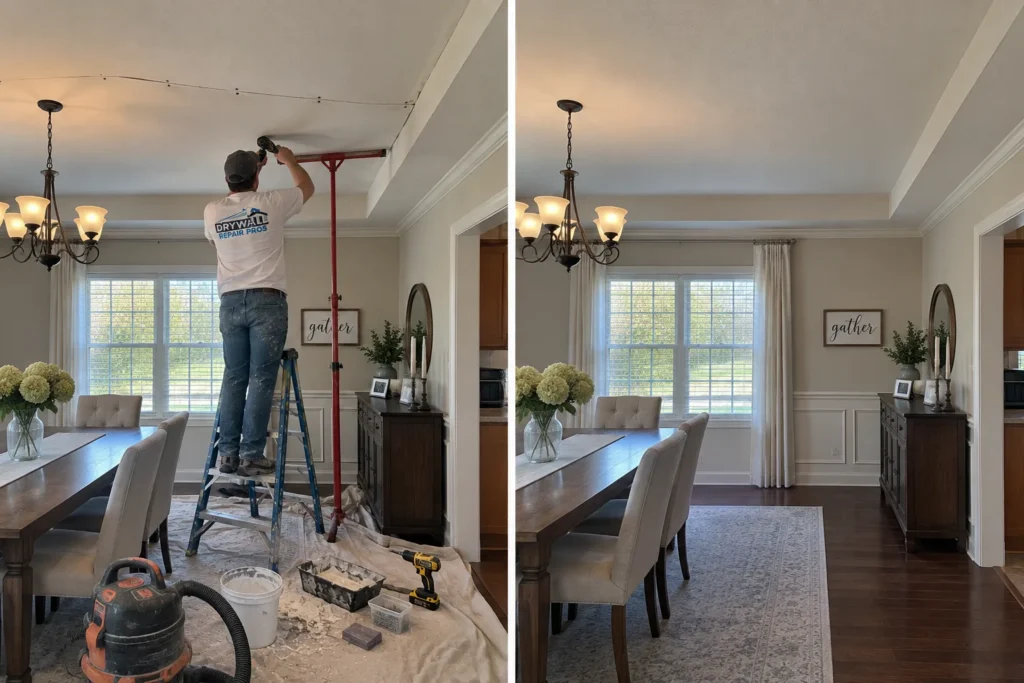
Small Drywall Hole Repair
Small drywall holes are common in occupied homes, rentals, and apartments. Typical examples include nail and screw holes, anchor holes, small punctures, minor impact damage, and holes left after removing lightweight fixtures.
The visible opening does not always show the full extent of the damage. Torn face paper, crushed gypsum, or loose material around the hole may require additional preparation. A good small-hole repair leaves the area smooth and stable rather than burying damaged material under a thick spot of compound.
Large Drywall Hole Repair
Large drywall holes usually require a physical patch rather than simply filling the opening. When drywall is missing or badly broken, the damaged area may be trimmed back to solid material, supported with backing or framing as needed, and fitted with replacement drywall.
The repair method depends on the size and shape of the opening, drywall thickness, framing location, and condition of the surrounding surface. Even a substantial hole can often be repaired without replacing an entire drywall sheet or wall.
Hole in Wall Repair
A hole in an interior wall is one of the most common drywall repair requests. We repair wall damage from doorknobs, furniture, TV mounts, shelving, anchors, removed fixtures, plumbing and electrical work, moving damage, and remodeling.
When the surrounding drywall is damaged or unstable, the opening may need to be cut back before patching. This creates a sound edge for the repair and helps prevent cracking, sinking, or a visible outline later.
Doorknob Hole Drywall Repair
Repeated contact between a doorknob and wall can dent the surface, crush the gypsum, or eventually create a hole. Minor damage may need localized repair, while a larger opening may require a supported drywall patch. The finished area should transition smoothly into the surrounding wall.
Drywall Puncture Repair
Not every drywall hole has clean edges. Impacts can puncture or crush the gypsum while leaving torn paper and loose material around the opening. Unstable material needs to be removed or secured before the damaged section is rebuilt and finished.
Want Pricing for a Repair Like This?
Most visible repairs can start with photos. Send the property address, a short description, and up to six images.
Drywall Cutout & Access Hole Repair
Drywall is often intentionally opened so plumbers, electricians, HVAC technicians, remodelers, or inspectors can reach pipes, wiring, ducts, framing, insulation, valves, or other components inside a wall or ceiling.
Once the work behind the surface is complete, the opening can usually be closed with new drywall or an appropriate reusable cutout, secured with proper support, then taped and finished into the surrounding surface. The method depends on the size of the opening and whether the surrounding drywall remained intact.
For projects created by another trade, see our Drywall Repair After Plumbing Work and Drywall Repair After Electrical Work services.
Ceiling Hole Repair
Ceiling holes may be left after plumbing or electrical work, leak investigation, removed fixtures or vents, HVAC access, water-damaged drywall removal, or other repairs above the ceiling.
Ceiling patches require dependable overhead support, and uneven finishing can be especially noticeable under ceiling lighting. For larger or ceiling-specific damage, see our Ceiling Drywall Repair and Ceiling Hole & Patch Repair services.
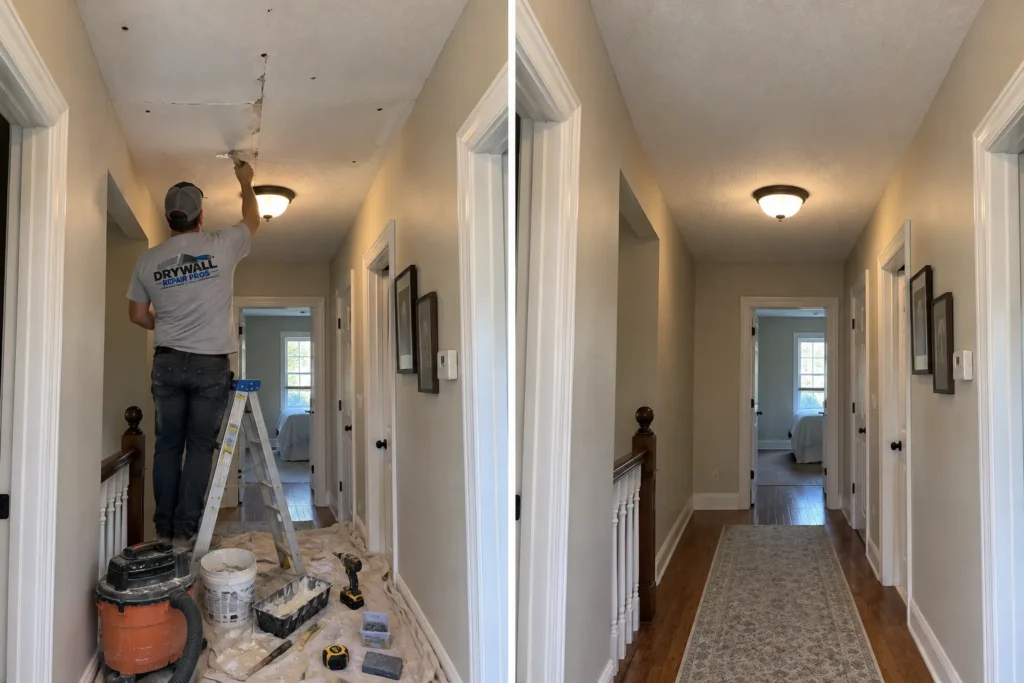
Holes From TVs, Shelving, Cabinets & Removed Fixtures
Removing wall-mounted items can leave clusters of fastener holes, large anchors, cable openings, torn drywall paper, crushed gypsum, recessed hardware openings, and unfinished areas that were previously hidden.
TV mounts, cabinets, shelving systems, mirrors, brackets, curtain hardware, railings, and similar fixtures can often be removed without requiring an entire sheet of drywall to be replaced. We repair the affected area based on the amount of damage left behind and prepare the surface for its next finish.
Drywall Hole Repair for Rental Properties
Wall damage is common during rental turnover. Anchor holes, TV-mount openings, doorknob damage, furniture impacts, removed shelving, punctures, and larger damaged areas can often be repaired together as one project.
Landlords and property managers can send photos of multiple damaged areas in the same unit along with approximate dimensions. In most cases, we can review the repair scope remotely and provide a quote without scheduling a separate walkthrough, often the same day.
For broader turnover and multi-unit needs, see Rental Property & Apartment Drywall Repair.
Drywall Hole Repair for Homeowners
Homeowners often repair drywall holes before painting, selling a house, changing a room layout, completing remodeling, or after plumbing, electrical, or fixture work. Repairing the surface before painting matters because fresh paint can make uneven patch edges and poorly finished repairs more noticeable.
Drywall Hole Repair for Commercial Properties
We also repair drywall holes in offices, retail spaces, managed properties, and other commercial interiors. Common causes include equipment and furniture impacts, door hardware, signage removal, tenant changes, plumbing or electrical access, and remodeling. Multiple damaged areas can often be grouped into one repair project.
Can a Large Hole in Drywall Be Repaired?
Yes. Large drywall holes can often be repaired without replacing the entire wall. The damaged section is removed back to stable material when necessary, a properly supported replacement piece is installed, and the joints are finished and feathered into the surrounding surface.
The size of the opening matters, but the condition of the surrounding drywall and available support are often just as important. A large hole is not automatically a reason to replace an entire drywall sheet.
When Does a Drywall Hole Need a Patch?
Very small holes may require only localized filling and finishing. Larger openings usually need a physical drywall patch, especially when material is missing, the gypsum core is badly crushed, an access opening was intentionally cut, an earlier repair failed, or the replacement section needs support.
Using the appropriate repair method helps reduce the chance of cracking, sinking, movement, or visible repair edges later.
Why Proper Backing Matters
A replacement drywall patch needs support. Without appropriate backing or attachment to framing, the repaired section can flex or move and cracks may develop around the joints. The backing method depends on the size, location, and framing around the opening.
Why Drywall Hole Repairs Become Visible
A hole can be technically closed and still look repaired. Common causes include insufficient feathering, excessive compound buildup, uneven sanding, raised joints, visible tape edges, poor support, texture mismatch, and surface preparation that does not account for lighting across the wall or ceiling.
The transition between the repaired section and existing drywall is often more important visually than the center of the patch itself. Professional finishing extends beyond the opening so the repair blends gradually into the surrounding surface.
Matching Texture Around a Drywall Hole Repair
If the surrounding wall or ceiling is textured, the repaired area may also need texture work. Pattern, density, and the transition around the patch all affect how noticeable the repair is. For more detail, see Drywall Texture Repair & Matching or Ceiling Texture Repair & Matching.
Repairing Previous Drywall Hole Patches
Previous patches can crack, bulge, sink, loosen, show visible square outlines, or leave excessive compound and mismatched texture. When the existing repair is unstable or poorly built, part or all of it may need to be removed and rebuilt. For broader patch problems, see our Drywall Patch Repair service.
Drywall Hole Repair in Cedar Rapids
Drywall Repair Pros provides drywall hole repair throughout Cedar Rapids and surrounding communities for homeowners, landlords, apartments, rental properties, and commercial interiors. We handle small wall holes, large openings, punctures, doorknob damage, access holes, cutouts, and related ceiling holes. For broader local repair needs, visit Drywall Repair Cedar Rapids.
Drywall Hole Repair in Iowa City
We also provide drywall hole repair throughout Iowa City and surrounding communities. Whether the damage came from an accident, removed fixture, rental turnover, plumbing or electrical access, or remodeling, we can determine the appropriate repair method for the damaged area. For broader local services, visit Drywall Repair Iowa City.
Our Drywall Hole Repair Process
Start With Photos – Usually No Estimate Visit Needed
Send a few clear photos, approximate dimensions, and basic details about the damaged area. Include whether the hole is on a wall or ceiling, whether the surface is textured, and whether there are multiple areas to repair. Most drywall hole repairs can be evaluated from this information, and pricing can often be provided the same day.
Evaluate the Damage. We review the size, location, cause, and condition of the drywall around the opening.
Prepare the Area. Loose paper, broken gypsum, failed patch material, or unstable edges are removed or stabilized as needed.
Create Support. Larger openings receive backing or framing support when needed so the replacement section can be securely installed.
Install the Repair. Replacement drywall is fitted when required, and the joints are taped and finished.
Feather and Prepare the Surface. The repair is blended beyond the immediate opening, sanded, and prepared for the next finishing stage.
Address Texture When Needed. Textured walls or ceilings may require texture matching so the repaired area transitions into the existing surface.
Frequently Asked Questions About Drywall Hole Repair
Can any hole in drywall be repaired?
Most localized drywall holes can be repaired. The method depends on the size of the opening, its location, and the condition of the surrounding drywall.
How big of a drywall hole can be patched?
Large holes can often be patched with properly supported replacement drywall. There is no single maximum size because the repair method changes as the opening becomes larger.
Can you repair a hole without replacing the whole drywall sheet?
Yes. In many cases, only the damaged section needs to be removed and replaced.
Can doorknob holes and TV-mount holes be repaired?
Yes. Doorknob impacts, bolt holes, anchors, cable openings, and related damage from wall-mounted televisions are common drywall repairs.
Can drywall access holes be repaired?
Yes. Openings left after plumbing, electrical, HVAC, inspection, or remodeling work can usually be closed and refinished after the work behind the wall or ceiling is complete.
Can ceiling drywall holes be repaired?
Yes. Ceiling holes can be repaired, although replacement sections need appropriate overhead support and careful finishing.
Will the drywall patch be visible?
The goal is to minimize the visibility of the repaired area. Final appearance depends on the surrounding drywall, lighting, texture, previous coatings, and finishing requirements.
Should drywall holes be repaired before painting?
Yes. Holes, patch edges, torn paper, dents, and uneven surfaces can become more noticeable after painting if they are not properly repaired first.
Can several drywall holes be repaired at once?
Yes. Multiple wall or ceiling holes can often be handled during the same project, especially in rentals, homes being prepared for sale, remodeling projects, or properties with several previous access openings.
Can you quote drywall hole repair from photos?
In most cases, yes. Upload clear photos, approximate dimensions, whether the damage is on a wall or ceiling, and any useful details about the cause. Most drywall hole repairs can be priced without a separate estimate visit, and quotes can often be provided the same day.
How much does drywall hole repair cost?
Cost depends on the number and size of the holes, location, wall versus ceiling placement, accessibility, texture, drywall thickness, and finishing required. See our Drywall Repair Cost & Pricing Guide for broader pricing information.
Get a Fast Drywall Hole Repair Quote
You usually do not need to schedule an in-person estimate just to find out what your drywall hole repair will cost. Send us a few clear photos and basic information about the damage.
For the fastest review, include:
- Approximate width and height of each damaged area
- Whether the damage is on a wall or ceiling
- What caused the damage, if known
- Whether the surrounding surface is smooth or textured
- Whether there are multiple holes or damaged areas
- A wider photo showing where the damage is located, plus a closer photo of the opening
For most drywall hole repairs, that is enough information for us to evaluate the project and prepare a quote. In many cases, pricing can be provided the same day.
Drywall Repair Pros serves Cedar Rapids, Iowa City, and surrounding communities. Upload your photos and project details to request your free drywall hole repair quote.