What Kind of Drywall Damage Do I Have?
You do not need to diagnose drywall like a contractor before requesting repair. Recognizing the visible symptom can help you photograph the damage clearly and describe the problem when requesting an estimate.
Holes & Openings
Holes range from tiny fastener points to large access openings. Note approximate dimensions, whether the edges are broken or cleanly cut, and whether anything behind the wall still needs access.
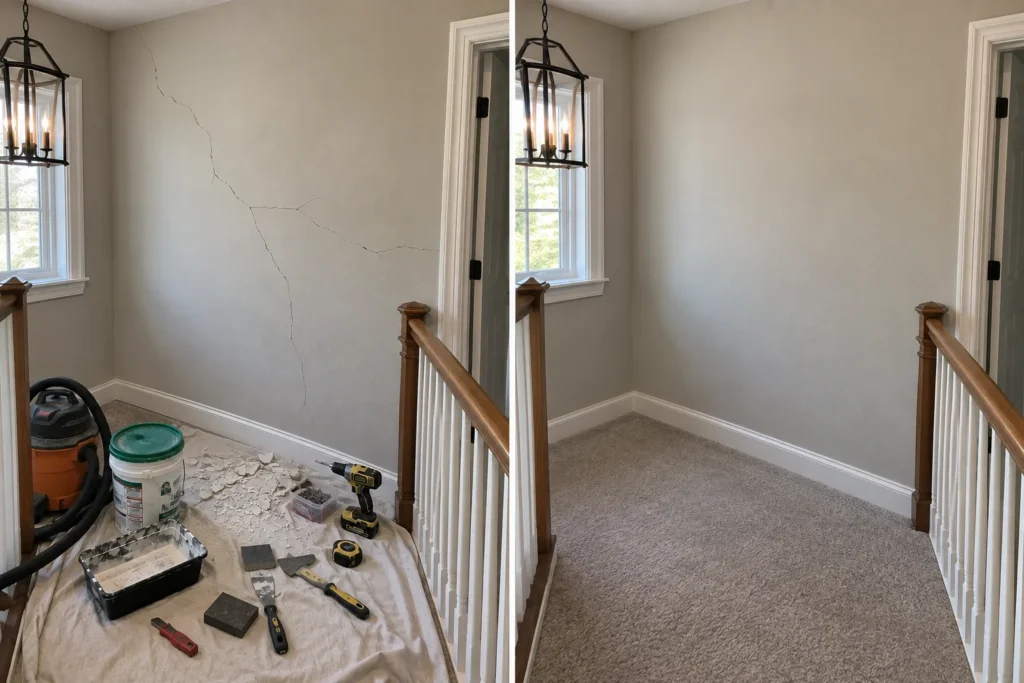
Cracks
Photograph the full crack, both ends, nearby doors or windows, and any place where it changes direction. Recurring or changing cracks deserve more context than simply covering the line.
Loose Tape & Visible Seams
Bubbles, lifted edges, ridges, or straight lines at drywall joints can indicate tape or joint failure. Side lighting often makes these defects easier to photograph.
Nail Pops & Screw Pops
Small circular bumps or depressions can occur where fasteners move relative to the finished surface. Multiple pops in a pattern can be useful context.
Damaged Corners
Outside corners can chip, dent, crack, or expose damaged corner bead. Include photos showing the corner from both faces.
Water Stains, Softness & Sagging
Water-related symptoms may include discoloration, bubbling paint, soft drywall, swelling, loose tape, crumbling material, or sagging. Correct the moisture source before permanent repair.
Failed Previous Patches
Old repairs can show ridges, depressions, mismatched texture, cracking edges, or loose material. A new repair may need to remove part of the failed patch rather than simply add another layer.
Use the Symptom to Find the Right Service
Use the visible symptom as a starting point. If you are still unsure what kind of repair you need, send photos and describe what you see. Send photos of the damaged area, the property address, and a short description of what happened. Clear wide, medium, and close-up photos can often provide enough information to establish an initial repair scope without adding an unnecessary first visit.
Other Drywall Problems Worth Photographing
- Torn or peeled drywall face paper
- Over-sanded or fuzzy paper around a previous repair
- Gouges and dents from furniture or moving
- Gaps or damaged edges around vents and fixtures
- Pest or animal access damage when the underlying issue has been addressed
- Damage around shower, tub, cabinet, backsplash, or other improvement work
- Old patches that flash or show under side lighting
Symptom vs. Cause
The visible damage and its cause can both matter. A hole is the symptom, while plumbing work may be the cause. Knowing both helps us understand the repair before preparing an estimate.
Frequently Asked Questions
What causes drywall tape to bubble?
Loose adhesion, movement, moisture history, or previous finishing problems can contribute. The visible condition should be evaluated before repair.
Why do drywall nail pops happen?
They occur where the finished surface moves relative to a fastener; our nail and screw pop repair service explains the problem in more detail.
Why can I see drywall seams?
Joint finishing, movement, lighting, texture, or previous repairs can make seams visible.
Is a water stain only cosmetic?
Not always. Staining can exist with sound drywall or with softened, swollen, loose, or sagging material.
Why does an old patch show through paint?
Surface flatness, texture, porosity, sanding, and lighting can all reveal a previous repair.