
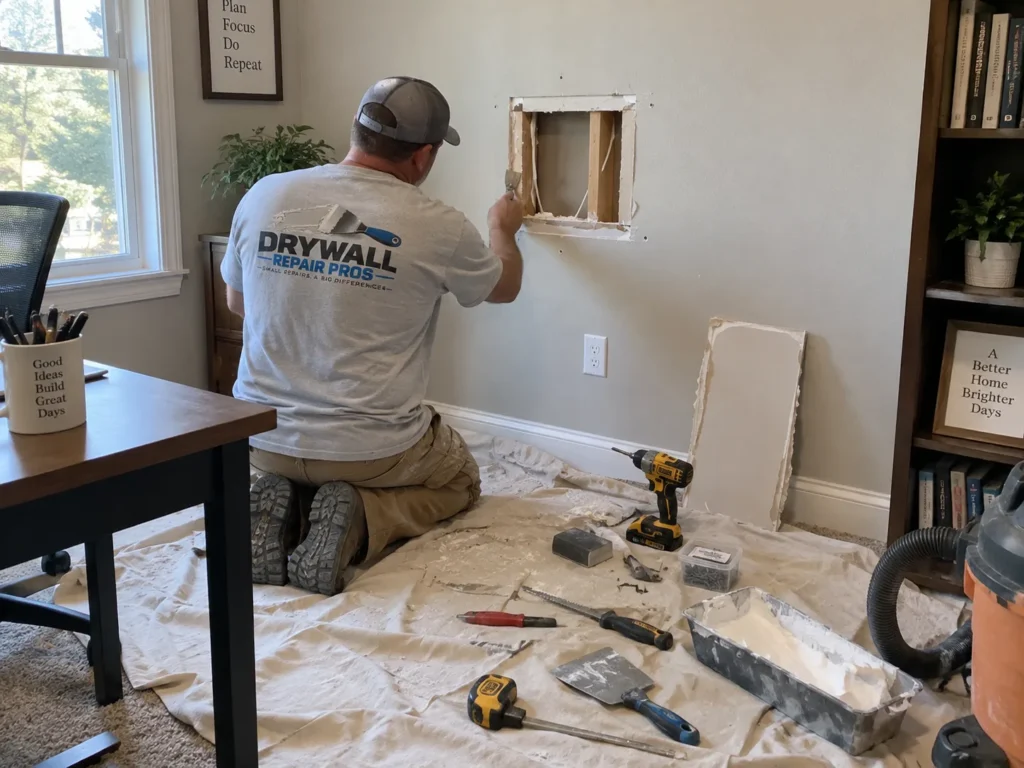
Professional Water-Damaged Drywall Repair in Cedar Rapids & Iowa City
Water can damage drywall quickly. A plumbing leak, burst pipe, overflowing fixture, appliance failure, roof leak, exterior leak, or hidden moisture problem can stain the surface, soften the gypsum core, loosen drywall tape, damage joint compound, and weaken sections of a wall or ceiling.
Drywall Repair Pros provides professional water-damaged drywall repair for homes, rental properties, apartments, and commercial interiors throughout Cedar Rapids, Iowa City, and surrounding communities.
We evaluate damaged drywall after the source of the moisture has been corrected and determine whether the affected material can remain, be repaired, or should be removed and replaced.
Common water-related drywall problems include soft drywall, swollen drywall, sagging sections, water stains, bubbling or peeling paint, loose tape, damaged seams, crumbling gypsum, and drywall removed during leak investigation.
The visible stain is only part of the problem. The condition and stability of the drywall determine whether a repair is appropriate.
Get a Fast Initial Quote From Photos
Most visible water-damaged drywall projects can be initially evaluated from clear photos and basic measurements once the source of the leak has been corrected. Send a close-up photo, a wider photo showing the surrounding wall or ceiling, the approximate dimensions of the damaged area, what caused the water damage, and whether the leak has been repaired.
In many cases, that is enough information for us to prepare initial pricing the same day without scheduling a separate estimate visit. Because moisture can sometimes affect concealed material, the final repair scope may change if hidden damage is discovered after compromised drywall is opened.
Drywall Water Damage Repair
Water-damaged drywall can range from a small stained area to material that has completely lost its strength. The extent of the damage depends on how much water entered, how long the drywall remained wet, where the moisture came from, whether water traveled inside the wall or ceiling, and whether the gypsum core or paper facing deteriorated.
A small leak discovered quickly may cause limited surface damage. A larger or longer-lasting leak can require removal of compromised drywall. The repair decision should be based on the condition of the material after the moisture source has been corrected and the area has dried appropriately.
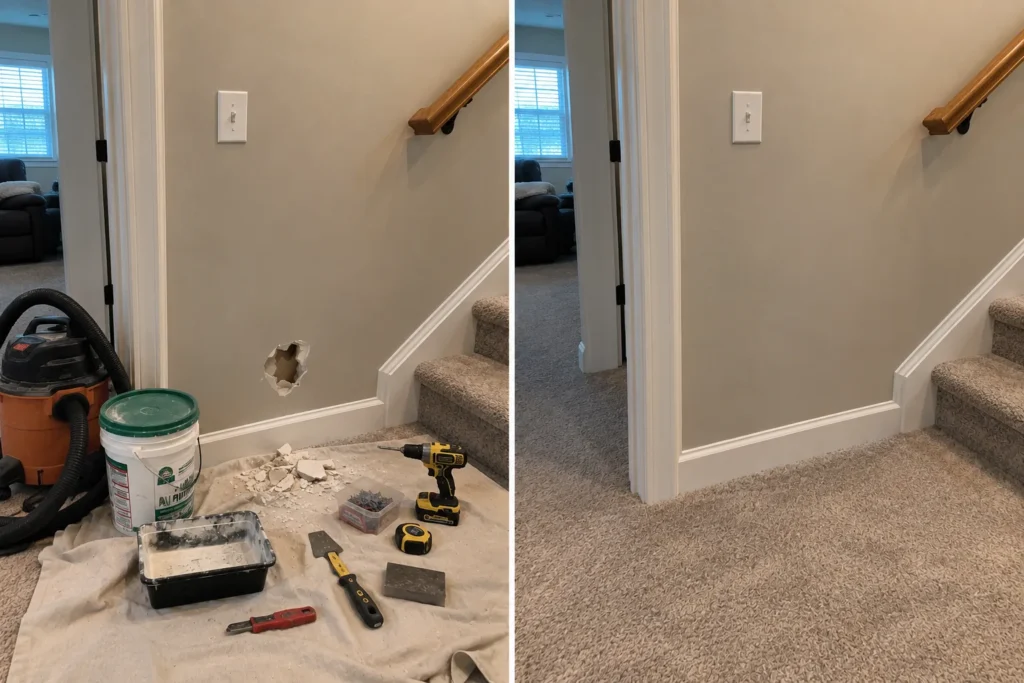
Can Water-Damaged Drywall Be Repaired?
Sometimes. Drywall that became damp but remained firm, flat, dry, and structurally sound may not always require replacement. Drywall that has become soft, swollen, sagging, crumbly, delaminated, or structurally weak may no longer be a good candidate for a surface-only repair.
We consider the strength of the drywall, condition of the paper facing, amount of swelling, duration of moisture exposure, wall versus ceiling location, condition of joints and tape, and whether the material has dried completely.
The goal is to leave sound material in place and replace drywall that is no longer suitable.
Signs of Water-Damaged Drywall
Water damage is not always obvious immediately. Some symptoms appear only after the material dries, and water can travel along framing or behind drywall before showing on the finished surface.
Common signs include:
- Yellow or brown water stains
- Soft or spongy drywall
- Swollen, wavy, or distorted areas
- Sagging wall or ceiling sections
- Bubbling or peeling paint
- Cracked joint compound
- Loose, wrinkled, or peeling drywall tape
- Crumbling gypsum or damaged drywall paper
- Discolored seams
- Musty odors or visible surface deterioration
Common Types of Water-Damaged Drywall
Soft Drywall
Soft drywall usually indicates that moisture has affected the gypsum core. If the material feels spongy, weak, or easily deformed, a cosmetic surface repair may not be enough. Depending on the severity, the affected section may need to be removed back to sound material and replaced.
Swollen Drywall
Drywall can swell or distort after absorbing moisture, creating bulges, raised areas, wavy surfaces, damaged seams, or loose tape. Once the gypsum core has significantly changed shape, localized replacement may produce a better result than trying to flatten material that no longer sits correctly.
Water-Stained Drywall
A water stain does not automatically mean the drywall has lost structural strength. If the source has been corrected, the area is dry, and the drywall remains firm and stable, replacement may not be necessary. Stained areas should still be checked for softness, swelling, failed tape, damaged compound, or other deterioration before cosmetic finishing.
Want Pricing for a Repair Like This?
Most visible repairs can start with photos. Send the property address, a short description, and up to six images.
Drywall Repair After Plumbing & Appliance Leaks
Plumbing and appliance failures are among the most common causes of water-damaged drywall. Damage can follow supply-line leaks, drain leaks, sink or toilet leaks, shower and bathtub leaks, frozen or burst pipes, water-heater failures, dishwashers, washing machines, refrigerators, ice makers, and hidden plumbing leaks.
Water may enter a wall cavity, travel beneath flooring, or appear in a room below before the source becomes obvious. Once the plumbing or appliance problem has been corrected and the affected area is dry, the drywall can be evaluated for repair or localized replacement.
For drywall openings created specifically to access plumbing rather than drywall damaged by water, see Drywall Repair After Plumbing Work.
Burst or Frozen Pipe Damage
A burst or frozen pipe can release a large amount of water quickly. Drywall near the failure may become saturated, soft, swollen, or unstable. Compromised sections may need to be removed so the affected cavity can be addressed before replacement drywall is installed and finished.
Water-Damaged Drywall in Bathrooms, Kitchens & Basements
Bathroom Water Damage
Bathrooms are vulnerable to drywall damage from showers, tubs, toilets, sinks, supply lines, and leaks that travel into adjoining walls or ceilings below. Common symptoms include stains, soft spots, swelling, loose tape, peeling paint, and damaged joint compound.
Kitchen Water Damage
Kitchen drywall may be affected by sink plumbing, dishwashers, refrigerator water lines, appliance failures, roof leaks, or water from rooms above. Damage can remain hidden behind cabinets or near plumbing penetrations before it becomes visible.
Basement Water Damage
Basement drywall can be affected by plumbing leaks, water heaters, sump-pump problems, exterior water intrusion, foundation moisture, or flooding. Because prolonged moisture may affect a larger area than what is visible, basement drywall should be repaired only after the moisture source has been addressed and the affected area has dried appropriately.
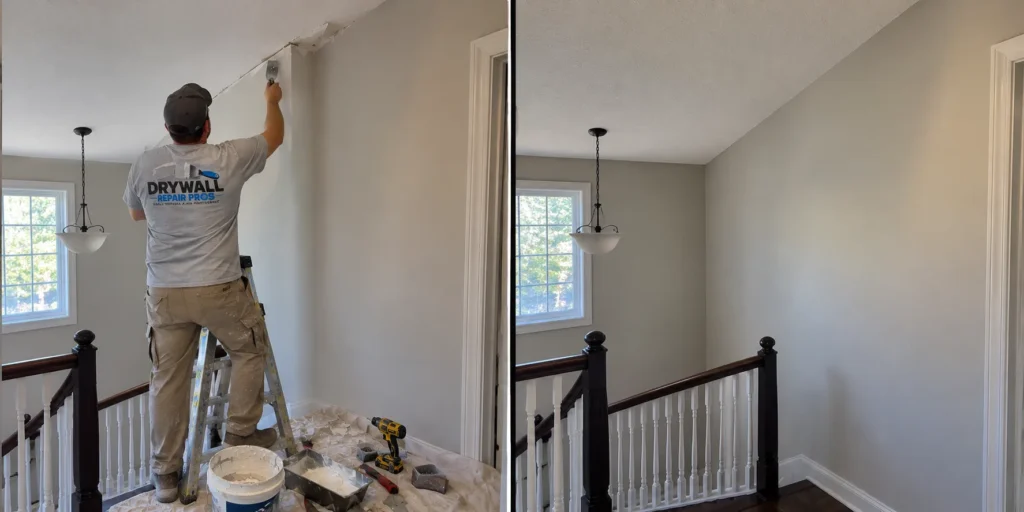
Drywall Repair After a Roof Leak
Roof leaks frequently damage ceilings and upper wall sections, causing brown stains, bubbling paint, softened drywall, sagging, failed tape, or damaged seams. Once the roof leak has been corrected and the area is dry, the damaged drywall can be evaluated.
Drywall Repair After Flooding
Flooding can affect a much larger area than a typical localized leak, especially when the lower portions of walls remain wet for an extended period. Drywall repair should begin only after the water source, drying, and any necessary mitigation work have been handled.
The drywall portion of the restoration may involve removing compromised sections, replacing damaged material, finishing joints, and restoring the visible wall or ceiling surface.
Wet Drywall Replacement
Wet drywall does not always need to be replaced simply because it got wet. Replacement becomes more likely when the material is soft, sagging, swollen, crumbling, delaminated, structurally weak, badly distorted, or extensively saturated.
When damage is localized, removing only the compromised section can often preserve otherwise sound drywall and avoid unnecessary replacement.
Water-Damaged Sheetrock Repair
Customers often use Sheetrock and drywall interchangeably. Terms such as water-damaged Sheetrock, wet Sheetrock, water-stained Sheetrock, and drywall water damage generally describe the same type of gypsum-board damage.
The repair decision still depends on moisture exposure, material stability, and whether the damaged section remains suitable for repair.
Water-Damaged Drywall Tape & Seams
Moisture can weaken drywall joints and cause tape to bubble, peel, wrinkle, lift, or separate. Joint compound may also swell, crack, or become loose along seams.
Failed tape or seams should not simply be buried under another layer of compound. Once the area is dry and stable, loose material can be removed and the affected joint rebuilt as needed.
For broader non-water-related joint problems, see Drywall Tape Repair and Drywall Seam & Joint Repair.
Hidden & Localized Water Damage
Water can remain concealed around windows, exterior doors, behind cabinets, inside plumbing walls, and along lower wall sections. Repeated leakage may cause staining, swelling, missing paper, crumbling gypsum, damaged corners, or soft drywall before the full extent of the problem is visible.
The source of the leak should be corrected first. Once the area is dry, localized damaged drywall can be removed and restored.
Water-Damaged Drywall in Rental Properties
Rental properties commonly experience drywall water damage from plumbing leaks, overflowing fixtures, appliance failures, roof leaks, and delayed maintenance issues. Landlords and property managers often need several damaged areas evaluated quickly between occupants.
Send photos of each damaged area, approximate dimensions, the cause of the leak, and confirmation that the moisture source has been repaired. Most visible repair areas can be reviewed remotely for initial pricing, often the same day.
For broader turnover and apartment work, see Rental Property & Apartment Drywall Repair.
Water-Damaged Drywall in Commercial Properties
Commercial buildings can experience drywall water damage from plumbing failures, roof leaks, HVAC condensation, sprinkler leaks, appliance failures, and exterior water intrusion. Damage may affect offices, hallways, retail interiors, utility rooms, tenant areas, and managed properties.
For broader commercial wall and ceiling work, see Commercial Drywall Repair.
Repair Water-Damaged Drywall Before Painting or Selling
Paint does not restore drywall that is still soft, swollen, loose, or unstable. Water-damaged areas should be dry, sound, properly repaired, finished, and prepared before final coating.
Visible water stains or old leak damage can also raise questions during a home sale even when the leak has already been corrected. Repairing the damaged drywall and keeping documentation that the moisture source was addressed can help distinguish old cosmetic damage from an active problem.
Water-Damaged Drywall Repair in Cedar Rapids
Drywall Repair Pros provides water-damaged drywall repair throughout Cedar Rapids and surrounding communities. We repair wet drywall, soft or swollen drywall, water-stained walls, drywall damaged by plumbing or appliance leaks, localized leak damage, and compromised sections that require replacement. For broader local services, visit Drywall Repair Cedar Rapids.
Water-Damaged Drywall Repair in Iowa City
We also provide water-damaged drywall repair throughout Iowa City and surrounding communities for homeowners, landlords, rental properties, apartments, property managers, and commercial interiors. Services include wet Sheetrock repair, soft drywall replacement, leak-damaged wall repair, water-stained drywall repair, and localized replacement after moisture damage. For broader local services, visit Drywall Repair Iowa City.
Our Water-Damaged Drywall Repair Process
Start With Photos and Basic Damage Details
Once the leak or moisture source has been corrected, send close-up and wider photos, approximate dimensions, wall or ceiling location, what caused the damage, whether the area feels soft or swollen, and whether the surface is textured. Most visible projects can be initially evaluated from this information.
Confirm the Moisture Source Has Been Corrected. Drywall repair should not begin while the area is still being exposed to water. The plumbing, roof, appliance, exterior leak, or other source should be addressed first.
Evaluate What Drywall Can Remain. We consider softness, swelling, sagging, failed tape, damaged compound, visible distortion, and the stability of the surrounding material.
Remove Compromised Material When Necessary. Soft, crumbling, swollen, delaminated, or unstable drywall is removed back to sound material when replacement is required.
Install and Secure Replacement Drywall. New drywall is fitted and fastened where compromised material has been removed.
Tape, Finish, and Feather the Repair. Replacement sections are integrated into the surrounding surface, and the finished area is feathered so the transition is less noticeable.
Restore Texture and Prepare the Surface. Textured areas can be blended as appropriate, and the repaired surface is prepared for its next finish.
Repair or Replace Water-Damaged Drywall?
Not every water-damaged area requires the same solution.
Repair may be appropriate when:
- The drywall remains firm and stable
- Moisture exposure was limited
- The material has dried completely
- Surface damage is localized
- Joint tape or compound can be repaired
Replacement may be more appropriate when:
- The drywall is soft or structurally weak
- The gypsum core is deteriorated or crumbling
- The surface is badly swollen or distorted
- The material is sagging
- The paper has separated or delaminated
- Damage is extensive
For a broader comparison of repair versus replacement, see Repair vs. Replace Drywall.
Frequently Asked Questions About Water-Damaged Drywall
Can water-damaged drywall be repaired?
Yes, in some cases. The drywall should be dry and structurally sound. Soft, swollen, sagging, delaminated, or badly deteriorated material may need localized replacement.
Does wet drywall always need to be replaced?
No. Limited moisture exposure does not automatically mean drywall must be removed. The condition of the material after the moisture source has been corrected and the area has dried is what matters.
How can you tell if drywall is too damaged to repair?
Drywall that is soft, badly swollen, crumbling, sagging, delaminated, distorted, or structurally weak may no longer be suitable for repair.
Can drywall be repaired after a plumbing leak or burst pipe?
Yes. Once the plumbing problem is fixed and the affected area is dry, the damaged drywall can be evaluated. Saturated or weakened sections may need replacement.
Can water stains be repaired without replacing drywall?
Sometimes. If the drywall is dry, firm, flat, and structurally sound, replacement may not be necessary. The area should still be checked for hidden deterioration, loose tape, or damaged compound.
Can soft drywall be repaired?
Minor surface damage may sometimes be repairable, but drywall that has lost structural strength generally needs localized replacement.
Why is my drywall bubbling after a leak?
Moisture can cause paint, drywall paper, joint compound, or tape to separate from the surface, producing bubbles or blisters.
Why is drywall tape peeling after water damage?
Moisture can weaken the bond between joint tape and compound. Once the area is dry, failed tape may need to be removed and the joint rebuilt.
Should drywall be repaired before the leak is fixed?
No. The moisture source should be corrected first so the repaired drywall is not damaged again.
Can water-damaged drywall cause a ceiling to sag?
Yes. Saturated ceiling drywall can lose strength and begin to sag. Ceiling-specific water damage should be evaluated promptly.
Can water-damaged Sheetrock be repaired?
Yes. Sheetrock is a commonly used brand name for drywall. Whether it can be repaired depends on the amount of moisture exposure and the condition of the material.
Can you quote water-damaged drywall repair from photos?
Usually, once the moisture source has been corrected. Clear close-up and wider photos, approximate dimensions, wall or ceiling location, the cause of the leak, and details about softness or swelling can often provide enough information for initial pricing. Hidden damage discovered after the area is opened may affect the final repair scope.
How much does water-damaged drywall repair cost?
Cost depends on the size of the damaged area, wall versus ceiling location, amount of material requiring replacement, access, texture, number of repair areas, and finishing requirements. See our Drywall Repair Cost & Pricing Guide for broader pricing information.
Get a Fast Water-Damaged Drywall Repair Quote
Once the source of the leak has been corrected, you usually do not need to schedule a separate estimate visit just to start the pricing process. Send us clear photos and basic information about the damaged area.
For the fastest review, include:
- A close-up photo of the damaged drywall
- A wider photo showing its location on the wall or ceiling
- Approximate width and height of the visible damage
- What caused the water damage
- Whether the leak or moisture source has been repaired
- Whether the drywall feels soft, swollen, sagging, or loose
- Whether the surrounding surface is smooth or textured
- Photos of any additional damaged areas you want repaired
For many visible water-damage projects, that is enough information for us to prepare initial pricing, often the same day. If opening the damaged area reveals concealed deterioration, we will account for the additional repair scope.
Drywall Repair Pros serves Cedar Rapids, Iowa City, and surrounding communities. Upload your photos and project details to request your free water-damaged drywall repair quote.