
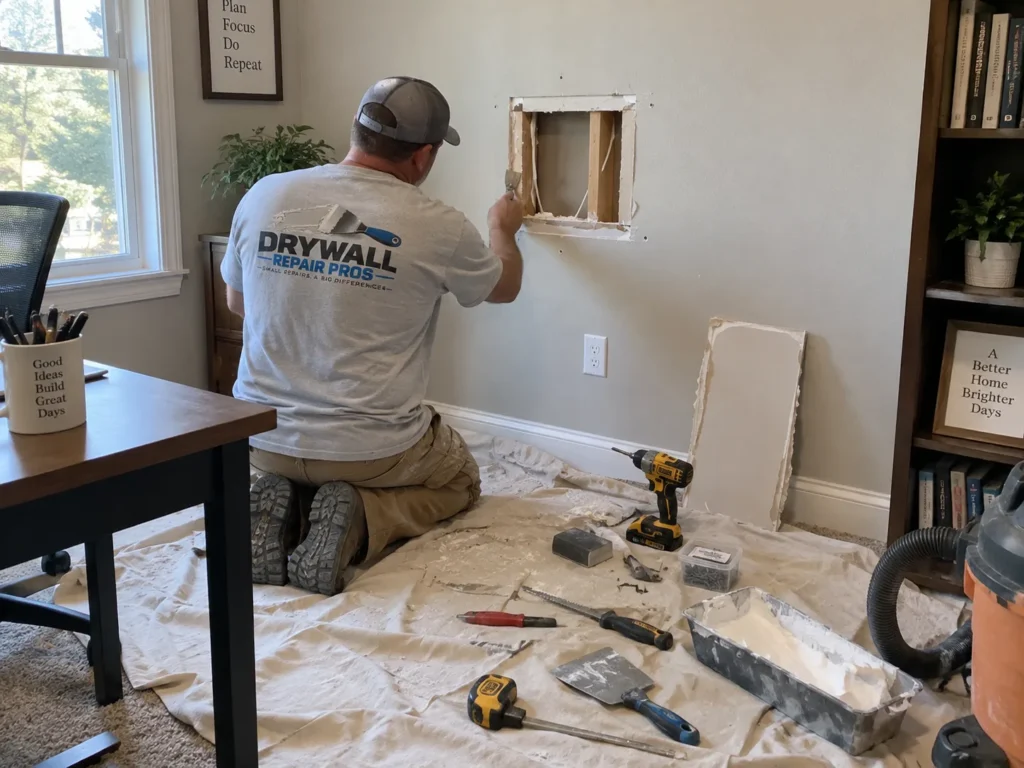
Professional Drywall Corner & Corner Bead Repair in Cedar Rapids & Iowa City
Drywall corners take more abuse than almost any other part of a finished wall. Outside corners can be chipped, dented, cracked, crushed, bent, or knocked out of shape. Inside corners can split, crack, gap, or develop failed finishing.
Drywall Repair Pros provides professional drywall corner and corner bead repair throughout Cedar Rapids, Iowa City, and surrounding communities. We repair damaged outside corners, cracked and chipped corners, dented or bent corner bead, loose or separating bead, rusted bead, recurring corner cracks, and previous corner repairs.
A proper repair should restore both the shape of the corner and the finished surface around it.
Get a Fast Corner Repair Quote From Photos
Most drywall corner repairs can be initially evaluated from photos. Send a close-up of the damage, a wider photo showing the corner in the room, whether it is an inside or outside corner, and the approximate length of the affected area.
Also tell us whether corner bead is visible, bent, loose, rusted, or cracked; whether the area has been repaired before; whether there has been water damage; and whether the wall is smooth or textured. In many cases, we can provide same-day initial pricing without scheduling a separate estimate visit.
Drywall Corner Repair
Drywall corner damage can involve the surface finish, the corner bead, the drywall underneath, or a combination of all three. Small chips may be mostly cosmetic, while deeper impact damage can deform the bead or break the drywall edge.
The repair method depends on whether the corner remains straight and secure or whether the underlying corner profile has been damaged.

Drywall Corner Bead Repair
Corner bead creates and protects a straight outside drywall corner. Depending on the installation, it may be metal, vinyl, paper-faced, or another composite material.
When the bead becomes bent, loose, cracked, rusted, or separated from the wall, the corner can look uneven even if additional compound is applied over it. The bead itself may need to be stabilized, reshaped, partially replaced, or fully replaced.
Common Corner Bead Problems
Cracked Corner Bead
Cracks can form along one or both edges of corner bead after impact, building movement, loose fastening, framing movement, or previous repair failure. If the bead itself moves, simply filling the crack usually will not provide a lasting repair.
Dented or Bent Corner Bead
Outside corners are common impact points for furniture, appliances, ladders, tools, carts, and moving equipment. A dented or bent bead can flatten the corner, create a visible wave, expose metal or vinyl, break surrounding compound, or push part of the corner inward.
Minor deformation may be repairable. Badly bent sections may need localized replacement so the corner can be straight again.
Loose or Separating Corner Bead
Loose bead may move when pressed, crack along its edges, create hollow spots, or allow compound to pop away from the corner. A separating section should generally be secured before refinishing.
Rusted Corner Bead
Metal corner bead can rust after moisture exposure. Brown staining, bubbling paint, cracked compound, visible corrosion, and flaking finish may indicate a moisture-related bead problem.
The moisture source should be corrected first. Corroded bead may require localized or full replacement depending on the extent of damage.
Chipped, Crumbling & Broken Drywall Corners
Chipped corners may expose joint compound, corner bead, drywall paper, or gypsum. Small chips can often be rebuilt locally, while larger broken areas may require reconstruction of the corner profile.
Repeated impact or moisture can also cause drywall at the edge to crumble. Loose material should be removed back to a stable surface before the corner is rebuilt.
Want Pricing for a Repair Like This?
Most visible repairs can start with photos. Send the property address, a short description, and up to six images.
Outside vs. Inside Drywall Corner Repair
Outside Corner Repair
Outside corners project into rooms and traffic paths, making them especially vulnerable to impact. Common repairs include dented bead, chipped compound, cracked edges, bent corners, loose bead, missing finish, and broken corner sections.
Outside-corner and corner-bead repairs require restoring the physical corner profile as well as the finished surface.
Inside Corner Repair
Inside corners can crack, split, gap, or show previous repair failure. The repair depends on whether the issue is movement at the corner, failed finishing, damaged drywall, or loose tape.
When loose, peeling, bubbling, or separated tape is the dominant problem, see Drywall Tape Repair. For broader crack-related problems, see Drywall Crack Repair.
Corner Bead Separation & Movement
Corner bead can separate from the drywall beneath it, creating cracks along one or both edges, raised compound, visible bead, loose edges, or movement when pressed.
The bead should be stabilized before the finish is rebuilt. Repeatedly coating over a moving corner can create thicker buildup while the crack continues to return.
Impact & Wear Damage to Drywall Corners
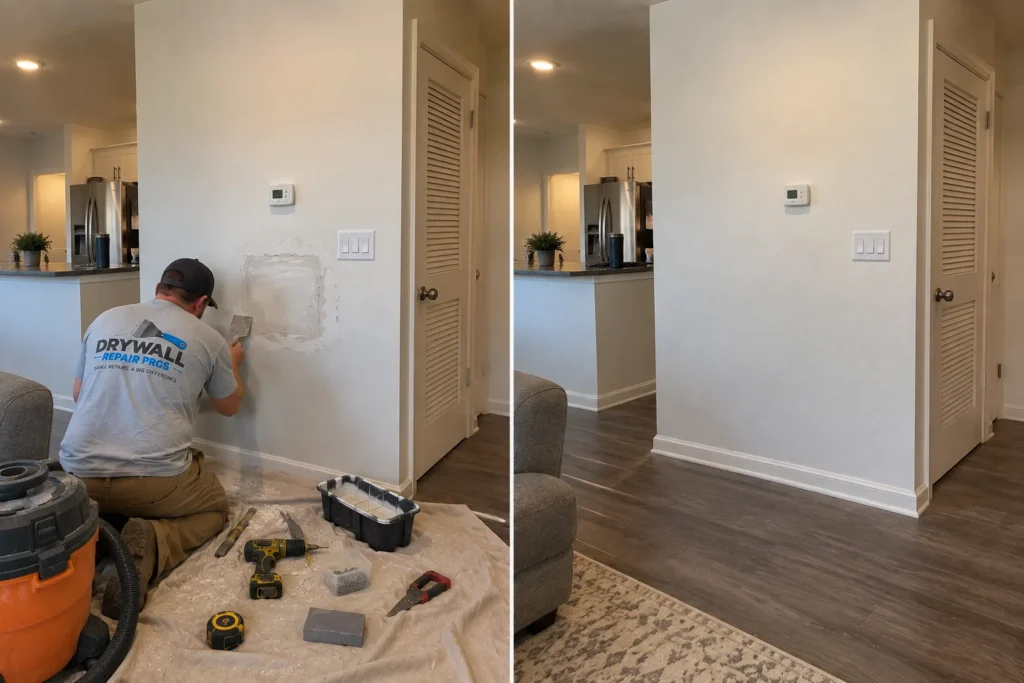
Many corner repairs begin with ordinary impact and wear. Furniture, moving, vacuum cleaners, carts, cleaning equipment, pets, tools, and household traffic can all chip, dent, crush, or scrape outside corners.
What looks like a small surface chip can sometimes involve a bent or loose bead underneath, so the corner should be checked before it is simply filled.
High-Traffic Corner Damage
Doorways, hallways, stairwells, landings, apartment corridors, and common areas are frequent repair locations because corners in these areas are exposed to furniture, equipment, children, pets, and repeated foot traffic.
Where damage keeps returning, the underlying bead should be checked for looseness or deformation rather than repeatedly adding compound over the same spot.
Corner Damage After Remodeling or Trade Work
Remodeling, plumbing, and electrical work can create or expose corner damage when walls are removed, openings are changed, cabinets or trim are altered, or access cuts are made near finished edges.
For broader project-specific repairs, see Drywall Repair After Remodeling, Drywall Repair After Plumbing Work, or Drywall Repair After Electrical Work.
Corner Damage Around Doors, Windows & Built-Ins
Corners around doorways, window returns, cabinets, and tile transitions can develop chips, cracks, loose bead, impact damage, water-related deterioration, or previous repair failure.
These areas often require careful finishing because the repair must terminate cleanly next to trim, tile, cabinetry, or another finished surface. Moisture should be ruled out where staining, rust, or repeated failure is present.
Corner Damage in Basements, Garages & Utility Areas
Basement and garage corners often take damage from storage, tools, bicycles, equipment, ladders, moving items, and moisture exposure. Repairs may range from small surface rebuilding to localized corner bead replacement.
Moisture-related deterioration should be corrected before final drywall refinishing.
Repairing Previous Drywall Corner Repairs
Older corner repairs may show thick compound buildup, uneven shape, recurring cracks, visible bead, poor sanding, crooked edges, or patches that do not follow the original corner line.
When the underlying corner is still loose or bent, adding another coat over the previous repair can make the profile worse. Removing loose buildup and rebuilding the corner may provide a cleaner result.
Why Does a Drywall Corner Keep Cracking?
Recurring corner cracks may result from loose corner bead, framing movement, failed tape, inadequate fastening, impact, or previous repair failure.
The important question is whether the corner itself is stable. If the bead or drywall continues to move, repeatedly filling the crack is unlikely to solve the cause.
Why Is My Corner Bead Cracking on Both Sides?
Cracks along both bead edges can indicate that the bead itself is moving, loose, poorly fastened, bent, or separating from the wall.
The corner should be stabilized before refinishing so the repair is not relying on compound to hold a moving corner in place.
Can Corner Bead Be Repaired Without Replacing It?
Sometimes. Corner bead that remains mostly straight, secure, and only lightly damaged may be repairable without replacement.
Replacement becomes more likely when the bead is badly bent, loose over a long section, broken, rusted, crushed, missing, or poorly installed.
Repair vs. Partial or Full Corner Bead Replacement
Localized Repair
Localized repair may be appropriate when the corner profile remains straight and secure and the damage is limited to chips, shallow dents, cracked finish, or a small section of loose material.
Partial Corner Bead Replacement
Only the damaged portion of bead may need replacement when the problem is localized and the remaining bead is secure. The replacement section must align with the existing corner so the finished edge remains straight.
Full Corner Bead Replacement
Full replacement may make more sense when the bead is badly bent, loose over a long section, heavily rusted, broken, crushed, or poorly installed throughout the affected corner.
Corner Repair on Smooth & Textured Walls
Smooth Walls
Smooth walls make crooked corners, ridges, dents, and uneven feathering easy to see. Straightness, surface flatness, sanding, feathering, and lighting all affect the finished result.
Textured Walls
Textured walls require the corner to be stabilized and rebuilt first, followed by texture restoration. Texture should not be used to hide a loose or misshapen corner.
For texture-focused work, see Drywall Texture Repair & Matching.
Repair Drywall Corners Before Painting or Selling
Corner damage should generally be repaired before final painting. Paint will not straighten bent bead, secure loose bead, rebuild missing material, correct deep dents, or stop recurring cracks.
Damaged corners are also easy to notice during showings and listing photography. Repairing the corner profile before painting creates a cleaner finished appearance.
Drywall Corner Repair for Rental Properties
Rental properties commonly develop corner damage from moving furniture, tenant turnover, vacuums, pets, general wear, and previous repairs.
Landlords and property managers can send photos of multiple corners at once, along with approximate damage lengths and whether bead is visible or loose. Most visible corner repairs can be reviewed remotely for initial pricing.
Commercial Drywall Corner Repair
Commercial corners may experience frequent contact from carts, deliveries, equipment, furniture, customers, and employees. Common repair locations include offices, retail spaces, hallways, waiting rooms, apartment common areas, and other high-traffic interiors.
Drywall Corner & Corner Bead Repair in Cedar Rapids
Drywall Repair Pros provides drywall corner repair and corner bead repair throughout Cedar Rapids and surrounding communities. Common projects include dented corner bead, cracked corner bead, bent or loose bead, chipped drywall corners, outside corner damage, recurring corner cracks, and previous failed repairs.
Drywall Corner & Corner Bead Repair in Iowa City
We provide professional drywall corner and corner bead repair throughout Iowa City and surrounding communities for homeowners, landlords, property managers, rentals, apartments, and commercial interiors. We repair damaged outside corners, loose or cracked bead, chipped corners, impact damage, and previous corner repairs.
Our Drywall Corner & Corner Bead Repair Process
Start With Photos and Corner Details
Send close-up and wider photos, whether the damage is on an inside or outside corner, the approximate damaged length, whether bead is visible, bent, loose, rusted, or cracked, whether moisture has been involved, and whether the wall is smooth or textured.
Identify the Type of Corner Damage. We determine whether the problem is surface damage, corner bead damage, inside-corner failure, moisture-related deterioration, or a previous repair.
Remove Loose Material. Cracked compound, crumbling drywall, loose finish, and unstable previous repair material are removed as needed.
Secure, Reshape, or Replace Damaged Bead. Loose bead is stabilized, minor deformation is corrected when practical, and damaged sections are replaced when necessary.
Rebuild the Corner Profile. The corner is restored so the edge is straight and the surrounding surfaces transition correctly.
Feather and Sand the Repair. Finishing material is extended into the surrounding wall and sanded so the repaired area does not remain as a ridge or hump.
Restore Texture and Prepare for Paint. Texture is restored where applicable and the corner is prepared for its next finish.
Can a Damaged Drywall Corner Be Repaired?
Yes. Most chipped, cracked, dented, and broken drywall corners can be repaired. The method depends on the size of the damaged area, condition of the corner bead, whether the drywall underneath is broken, whether moisture is present, and whether the corner moves.
Does Damaged Corner Bead Need to Be Replaced?
Not always. Minor dents and surface damage may be repairable while the existing bead remains in place.
Replacement is more likely when the bead is badly bent, broken, loose, rusted, crushed, missing, or unable to hold a straight corner profile.
Frequently Asked Questions About Drywall Corner Repair
Can dented corner bead be fixed?
Often, yes. Minor dents may be repairable, while badly deformed sections may need partial replacement.
Why is my drywall corner cracking?
Common causes include impact, loose corner bead, framing movement, failed inside-corner tape, or previous repair failure.
Why is my corner bead cracking on both sides?
Cracking along both sides can indicate that the bead itself is loose or moving beneath the compound.
Can loose corner bead be repaired?
Yes. Loose bead can often be secured and refinished if it remains reasonably straight and intact.
Can rusted corner bead be repaired?
Rusted sections may need replacement after the moisture source has been corrected and the surrounding area is appropriately dry.
Can broken outside corners be repaired?
Yes. Depending on the damage, the repair may involve rebuilding the surface, reshaping the corner, or replacing part of the corner bead.
Can inside drywall corners be repaired?
Yes. Inside-corner cracks, gaps, and failed finishing can be repaired. Loose or peeling tape may be better addressed as Drywall Tape Repair.
Can corner bead be replaced in only one section?
Yes. Localized replacement can be appropriate when most of the existing bead remains secure and the new section can be aligned cleanly.
Can textured drywall corners be repaired?
Yes. The corner is restored first, then the surrounding texture is repaired or blended.
Should drywall corner damage be repaired before painting?
Yes. Painting does not straighten bent bead, secure loose corners, rebuild missing material, or correct recurring cracks.
Can drywall corner repair be quoted from photos?
Usually. Clear close-up and wider photos, inside or outside corner location, approximate damage length, bead condition, previous repair history, moisture history, and wall texture can often provide enough information for initial pricing.
How much does drywall corner repair cost?
Cost depends on the size of the damage, type and condition of the bead, wall height, accessibility, texture, previous repairs, and whether localized or full bead replacement is needed. See our Drywall Repair Cost & Pricing Guide for broader pricing information.
Get a Fast Drywall Corner Repair Quote
Most visible drywall corner and corner bead repairs can be reviewed from photos without scheduling a separate estimate visit.
For the fastest review, include:
- A close-up photo of the damaged corner
- A wider photo showing the corner in the room
- Whether it is an inside or outside corner
- Approximate length of the damaged area
- Whether corner bead is visible
- Whether the bead is bent, loose, cracked, or rusted
- Whether the corner moves when pressed
- Whether there has been water damage
- Whether the wall is smooth or textured
- Whether the area has been repaired before
- Photos of any additional damaged corners you want included
In many cases, that information is enough for same-day initial pricing. Drywall Repair Pros serves Cedar Rapids, Iowa City, and surrounding communities.