
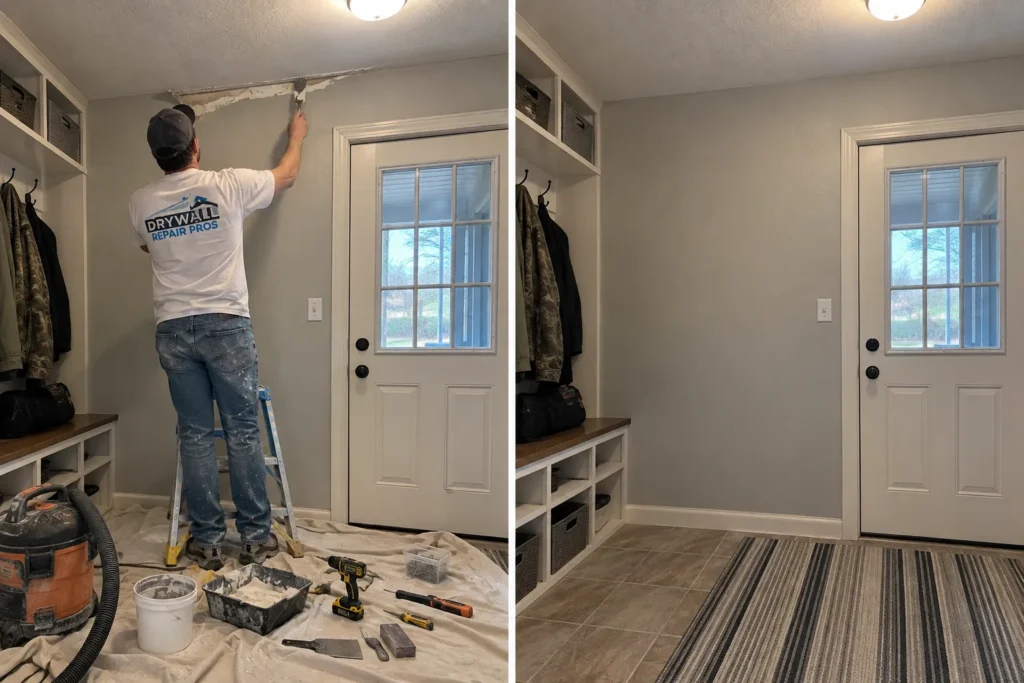
Sometimes the Cause Is the Best Way to Find the Right Repair
Drywall damage often happens during another event, such as plumbing work, electrical work, a roof leak, or trim removal. The cause matters because the surrounding repair conditions can be different.
The underlying repair can still involve holes, patches, tape, corners, texture, or ceilings. The repair approach depends on the cause, location, and condition of the damaged drywall.
Water Damage & Roof Leaks
Water-damaged drywall covers wet or previously wet wallboard, while water-damaged ceiling repair addresses ceiling-specific damage. Roof-leak drywall repair covers damage that followed a roof leak. All three reinforce the same sequencing principle: correct the source before permanent drywall restoration.
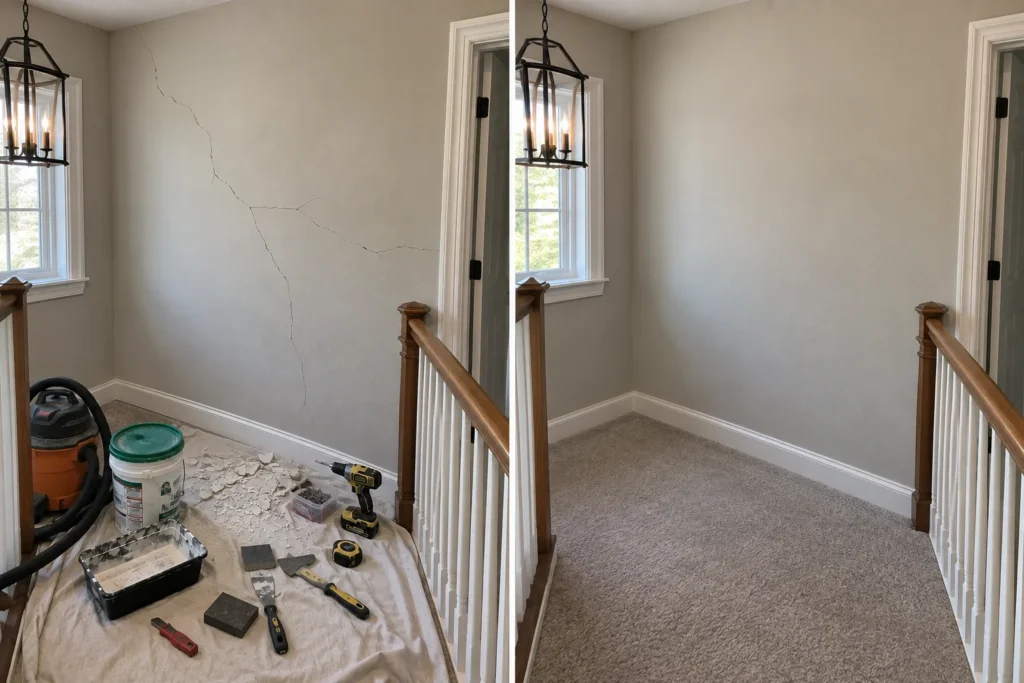
Drywall Repair After Plumbing Work
Plumbers may open walls or ceilings to reach supply lines, drains, valves, tubs, showers, sinks, toilets, or concealed piping. Our plumbing-related drywall repair service covers wall and ceiling openings left after completed plumbing access or repairs.
Drywall Repair After Electrical Work
Electrical upgrades can leave openings for wiring, outlets, switches, panels, lighting, cable routes, or troubleshooting access. Our electrical-related drywall repair service covers openings left after completed electrical work; ordinary holes can be handled as standard drywall hole repair.
Drywall Repair After HVAC & Ventilation Work
Vent relocation, duct access, thermostat wiring, equipment changes, and register work can disturb finished walls and ceilings. Our HVAC-related drywall repair service covers damage or access openings left after completed heating, cooling, duct, register, or thermostat work.
After Remodeling, Cabinets & Soffit Changes
Remodeling can leave removed partitions, cabinet footprints, backsplash transitions, soffit-removal damage, old fastener holes, unfinished board, and wall or ceiling areas that were never meant to remain exposed. We can restore drywall affected by remodeling, including areas around removed cabinets, soffits, fixtures, partitions, trim, and other changed finishes.
Windows, Doors, Flooring, Baseboards & Trim
New windows and doors can damage returns, corners, casing edges, and adjacent drywall. Flooring and trim work can expose torn paper, old caulk lines, fastener holes, or unfinished strips above shorter baseboards. Each type of damage can involve different repair locations, access conditions, and finishing needs.
Request a Cause-Based Repair Estimate
For the fastest useful first review, send the property address, a short description of what happened, approximate dimensions for larger areas, and clear photos. Include a wide room view, a medium view of the repair area, and a close-up showing the actual damage or texture. Multiple repairs should be labeled by room or unit. Visible, well-defined repairs can often be scoped initially from photos; concealed damage, active moisture, extensive sagging, unusual access, or uncertain conditions may require an on-site look.
Frequently Asked Questions
Can drywall be repaired after another contractor opens it?
Yes, once the underlying work is complete and the opening no longer needs to remain accessible.
Who repairs drywall holes left by a plumber?
A drywall repair contractor can close and finish the opening after the plumbing work is complete.
Can drywall be repaired after cabinet or soffit removal?
Often, yes. The scope depends on what was exposed, removed, or damaged and how the final wall or ceiling needs to finish.
Should drywall be repaired before the electrician or plumber is finished?
Permanent closure should wait until the opening is no longer needed for access.
What if water damage is involved?
Correct the moisture source first and document any staining, softness, swelling, loose material, or sagging.