
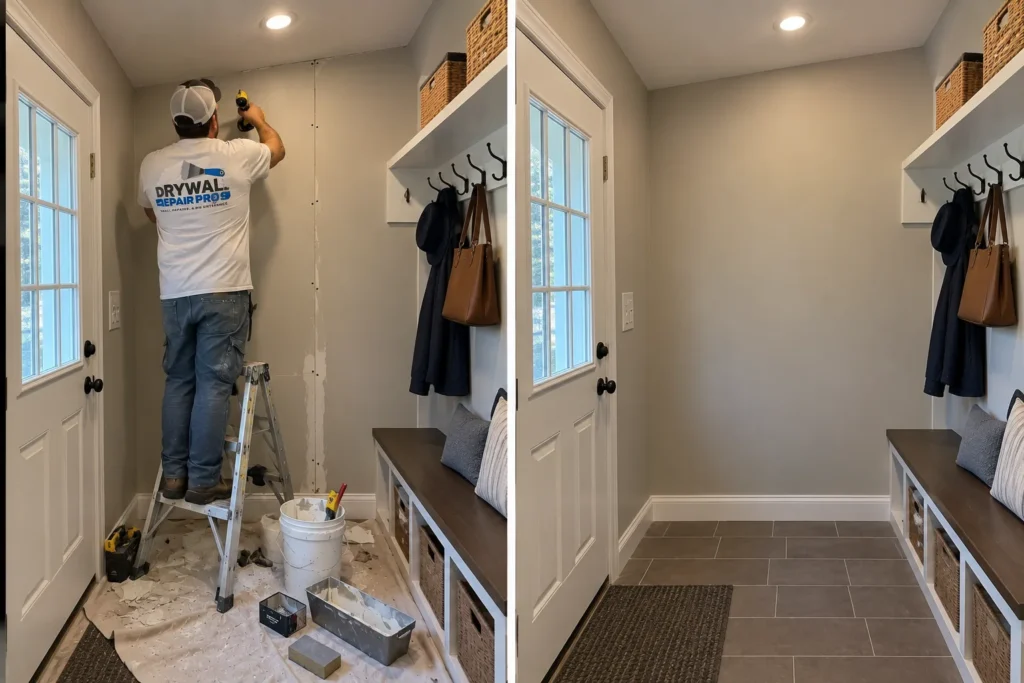
Professional Ceiling Hole Repair & Ceiling Drywall Patching in Cedar Rapids & Iowa City
Ceiling holes are more than cosmetic. Because drywall is overhead, the replacement piece needs proper support, secure fastening, careful joint finishing, and enough feathering to blend into the surrounding ceiling.
Drywall Repair Pros provides professional ceiling hole repair and ceiling patch repair for homes, rental properties, apartments, and commercial interiors throughout Cedar Rapids, Iowa City, and surrounding communities.
We repair small and large ceiling holes, plumbing and electrical access openings, HVAC cutouts, removed light and fan openings, remodel-related ceiling gaps, failed previous patches, and damaged sections left after corrected leaks or other repair work.
The repair method depends on the opening size and shape, location of framing or backing, drywall thickness, surrounding material, ceiling height, existing texture, and whether the area has been repaired before.
Get a Fast Ceiling Hole Repair Quote From Photos
Most ceiling holes, access openings, and failed patches can be evaluated from clear photos and a few basic measurements. Send a close-up photo, a wider room photo, approximate opening dimensions, ceiling height, whether the ceiling is smooth or textured, and what created the opening.
If a plumber, electrician, HVAC technician, roofer, or remodeler opened the ceiling, let us know whether that work is complete. In many cases, we can prepare pricing the same day without scheduling a separate estimate visit.
Ceiling Hole Repair
Ceiling holes can range from a small opening a few inches across to large rectangular sections removed for service access, remodeling, leak investigation, or replacement of damaged drywall.
Common causes include plumbing work, electrical access, recessed-light changes, ceiling-fan work, HVAC service, inspection openings, remodeling, fixture removal, accidental damage, and previous failed repairs.
The goal is not simply to cover the opening. The replacement drywall should become a stable part of the ceiling and finish at the correct height relative to the surrounding surface.
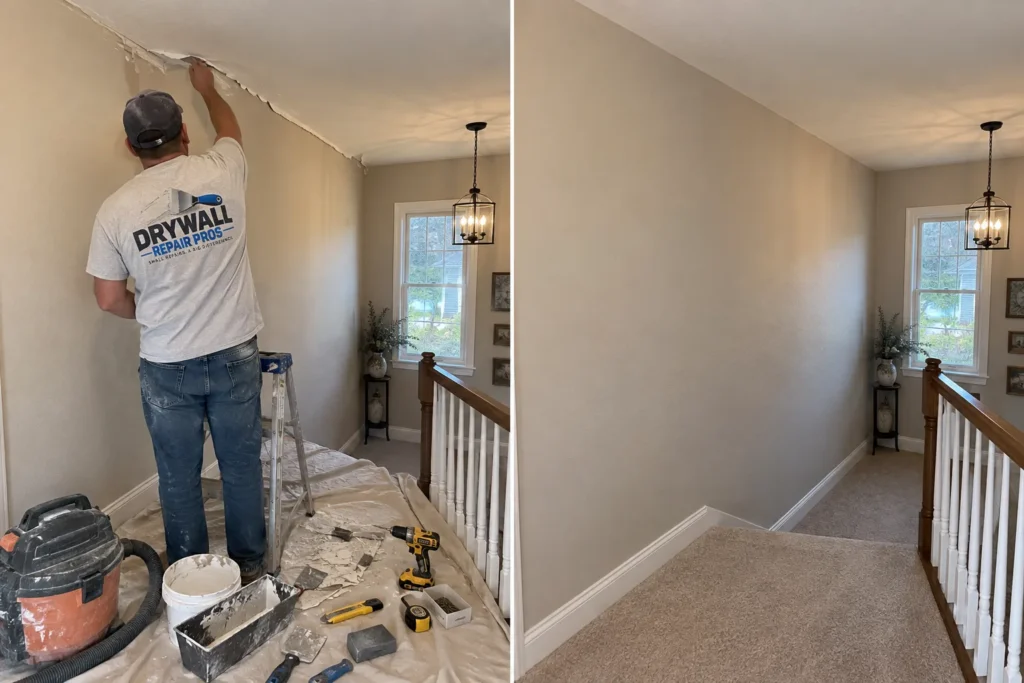
Ceiling Patch Repair
Ceiling patching restores a localized missing or damaged section of drywall. A successful patch depends on support behind the opening, correct drywall thickness, secure fastening, reinforced joints, appropriate compound buildup, broad feathering, careful sanding, and texture restoration when needed.
A properly repaired ceiling patch should not move, crack at the edges, sit noticeably high or low, or remain visible as a square or rectangular outline after painting.
Small & Large Ceiling Hole Repair
Small Ceiling Holes
Small openings may come from removed hooks, anchors, small fixtures, old fasteners, inspection points, or minor accidental damage. The repair method depends on the opening size and condition of the surrounding drywall.
Very small defects may need only localized repair. Once the opening is large enough that replacement drywall is required, the patch should be supported rather than relying on joint compound alone.
Large Ceiling Openings
Large ceiling holes often require a replacement drywall section. Typical examples include plumbing access holes, electrical cutouts, HVAC openings, water-damage removal areas, remodeling openings, and missing ceiling sections.
Because gravity continuously acts on an overhead patch, support is critical. Depending on the opening, the replacement piece may attach to existing framing, joists, or properly installed backing.
Ceiling Access Hole & Cutout Repair
Many ceiling openings are intentionally cut so another trade can reach pipes, wiring, ductwork, framing, leak locations, valves, junction boxes, or mechanical components above the ceiling.
These openings may be described as ceiling access holes, ceiling cutouts, rectangular ceiling openings, inspection openings, drywall ceiling cutouts, or service openings.
After the work above the ceiling is complete, the opening can usually be permanently patched. If regular future access will be necessary, a removable access panel may be more practical than closing the opening with drywall.
Plumbing, Electrical & HVAC Access Openings
Plumbing access holes commonly provide access to drain lines, supply lines, tubs, showers, toilets, valves, and piping between floors. Electrical openings may be created for wiring, junction boxes, lighting, ceiling fans, circuits, or troubleshooting. HVAC work may leave openings after duct, vent, register, or mechanical service.
Once the related work is complete and any moisture problem has been corrected, the ceiling opening can be restored. For projects where the trade work itself is the main reason for the repair, see Drywall Repair After Plumbing Work or Drywall Repair After Electrical Work.
Want Pricing for a Repair Like This?
Most visible repairs can start with photos. Send the property address, a short description, and up to six images.
Ceiling Holes After Lights, Fans & Fixtures
Removing or relocating ceiling fixtures often leaves openings or exposes drywall that was hidden by a larger canopy or trim piece.
Common repair situations include removed recessed lights, changed lighting layouts, oversized electrical openings, old mounting holes, damaged paper, ceiling-fan openings, gaps around boxes, and unfinished areas exposed when a larger fixture is replaced with a smaller one.
Once the electrical components are properly addressed, the surrounding drywall can be patched and finished.
Ceiling Openings After Remodeling or Water-Damage Removal
Remodeling may leave holes or long ceiling gaps after walls, soffits, cabinets, fixtures, plumbing, or electrical systems are moved. Wall removal can leave a long strip where the wall once met the ceiling, requiring backing, replacement drywall, long joint finishing, and texture blending.
Water-damaged drywall may also be removed after a leak, leaving a large open section. Before the opening is closed, the leak should be corrected, the area should be dry, and the surrounding ceiling should be stable enough to support the repair.
For projects where water damage remains the primary issue, see Water-Damaged Ceiling Repair. For broader remodeling repairs, see Drywall Repair After Remodeling.
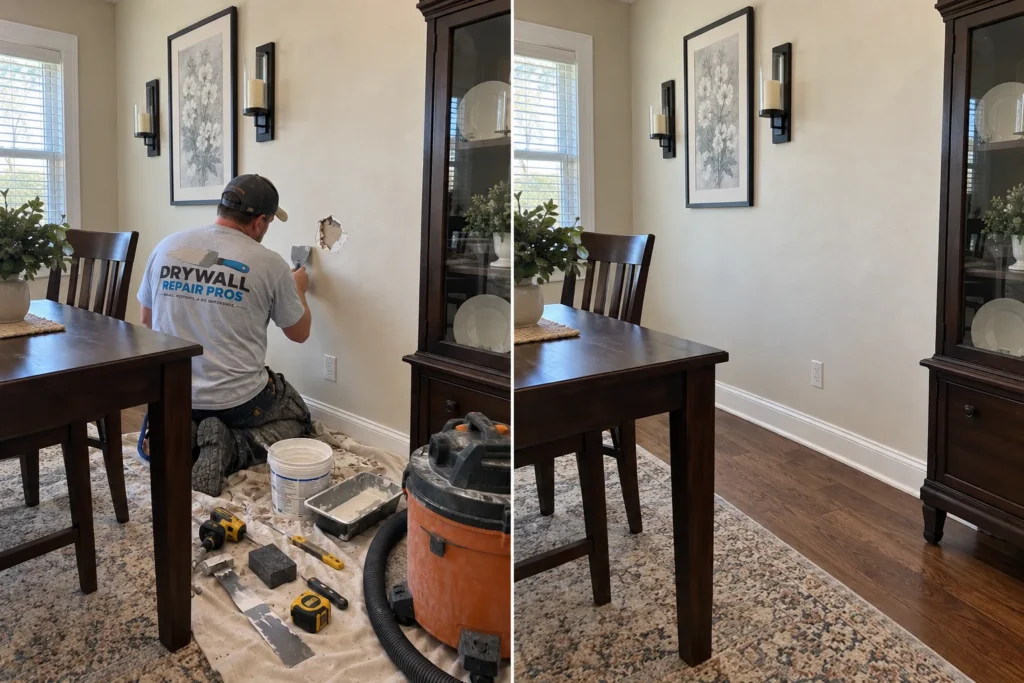
Failed & Visible Ceiling Patch Repair
Old ceiling patches often become more noticeable over time because ceilings are large uninterrupted surfaces and light travels across them at a shallow angle. A previous patch may remain structurally sound but look poor, or it may be unstable and need to be rebuilt.
Cracked Ceiling Patches
A patch may crack when there is movement at the joint, inadequate backing, loose drywall, poor fastening, failed tape, framing movement, or an unstable previous repair. Covering the crack alone may not last if the patch itself is moving.
Raised or Bulging Ceiling Patches
A raised patch can create a visible hump caused by replacement drywall that is too thick, excessive compound, raised tape, poor feathering, or a patch installed above the surrounding ceiling plane. Correction may require rebuilding the patch or widening the finished area to create a smoother transition.
Sunken Ceiling Patches
A patch that sits below the surrounding ceiling can create a noticeable depression. Common causes include drywall that is too thin, weak or misplaced backing, improper positioning, loose support, or insufficient finishing. The patch position should be corrected before cosmetic finishing.
Loose Ceiling Patches
A ceiling patch should not move when touched. Movement can lead to cracked joints, loose tape, visible seams, and recurring failure. Loose patches may need additional fastening, better backing, or replacement.
Visible Square or Rectangular Patch Outlines
A visible outline around a ceiling patch may result from different surface heights, excessive joint compound, narrow feathering, uneven sanding, texture mismatch, raised tape, or strong side lighting. The repair often needs a broader transition rather than another small layer directly over the visible edge.
Ceiling Patch Tape & Seam Problems
Tape reinforces the joint between replacement drywall and the existing ceiling. If the tape bubbles, peels, cracks, or loosens, the failed section may need to be removed and rebuilt rather than simply covered.
Visible perimeter seams can also result from movement, weak support, compound buildup, shrinkage, or previous repair failure. The patch should be checked for stability before refinishing. For widespread tape or joint problems, see Drywall Tape Repair or Drywall Seam & Joint Repair.
Smooth, Textured & Popcorn Ceiling Patches
Smooth Ceiling Patch Repair
Smooth ceilings are unforgiving because there is no texture to break up small changes in surface height. Patch depth, compound thickness, feathering, sanding, surface flatness, and lighting direction all affect how visible the repair will be.
Textured Ceiling Patch Repair
A textured ceiling repair has two distinct parts: restore the drywall surface first, then reproduce the existing texture as closely as practical. Texture should never be used to hide an unstable or poorly finished patch. See Ceiling Texture Repair & Matching for texture-focused work.
Popcorn Ceiling Patch Repair
Popcorn-textured ceilings can be patched after plumbing access, electrical work, fixture changes, water-damage removal, or accidental damage. The underlying drywall repair comes first, followed by texture restoration. See Popcorn Ceiling Repair for popcorn-specific work.
Why Can I Still See the Ceiling Patch After Painting?
Paint does not hide an uneven drywall repair. A patch can remain visible because of different surface height, raised compound, narrow feathering, uneven sanding, texture mismatch, paint-sheen differences, different porosity, or strong side lighting.
A patch that is uneven before painting may become more obvious after the finish coat. The ceiling should be stable, feathered, sanded, textured when applicable, and properly prepared before final painting.
Ceiling Hole & Patch Repair for Rental Properties
Rental units commonly need ceiling patching after plumbing repairs, electrical work, tenant damage, fixture changes, leak repairs, maintenance access, or turnover work.
Landlords and property managers can send photos of multiple repair areas together along with approximate dimensions, ceiling height, surface texture, and whether related trade work is complete. Most visible ceiling holes and patches can be reviewed remotely for initial pricing, often the same day.
Commercial Ceiling Hole & Patch Repair
Commercial ceiling drywall may need patching after tenant improvements, electrical modifications, plumbing repairs, HVAC work, lighting changes, maintenance access, or remodeling. Localized openings can usually be repaired after the related trade work is complete.
Ceiling Hole & Patch Repair in Cedar Rapids
Drywall Repair Pros provides ceiling hole repair and ceiling patch repair throughout Cedar Rapids and surrounding communities. Common projects include ceiling drywall patches, large ceiling-hole repair, ceiling access-hole repair, plumbing holes in ceilings, electrical ceiling patches, recessed-light openings, remodel cutouts, and failed ceiling-patch repair.
Ceiling Hole & Patch Repair in Iowa City
We provide ceiling hole and patch repair throughout Iowa City and surrounding communities for homeowners, landlords, property managers, rental properties, apartments, and commercial interiors. Services include ceiling drywall patch repair, large ceiling openings, ceiling cutout repair, access-hole patching, recessed-light holes, plumbing access openings, and failed previous patches.
Our Ceiling Hole & Patch Repair Process
Start With Photos and Opening Details
Send a close-up photo, a wider room photo, approximate width and height, ceiling height, whether the surface is smooth or textured, what created the opening, and whether plumbing, electrical, HVAC, roofing, or remodeling work is complete.
Review the Opening and Surrounding Ceiling. We evaluate the opening size, shape, surrounding drywall, ceiling finish, and whether previous repair material is present.
Confirm Related Work Is Complete. Trade work above the ceiling should generally be finished before the opening is permanently closed.
Prepare the Opening and Remove Unstable Material. Loose drywall, failed patch material, damaged edges, or unstable compound is removed as needed.
Add Support and Install Replacement Drywall. Backing or existing framing is used so the replacement piece can be fitted and fastened securely.
Tape, Finish, and Feather the Patch. Joints and fasteners are finished and the repair is feathered outward to create a gradual transition.
Restore Texture and Prepare the Surface. Smooth or textured ceilings are prepared for the appropriate final finish.
Can a Large Hole in a Ceiling Be Patched?
Yes. Large ceiling openings can often be repaired without replacing the entire ceiling when the surrounding drywall is sound and the replacement section can be properly supported, fastened, taped, and finished.
Localized replacement is often practical even when the opening is several feet across, provided the surrounding ceiling remains suitable.
Does the Whole Ceiling Need to Be Replaced?
Usually not for a localized hole or access opening. Whole-ceiling replacement may be considered when damage is widespread, large areas are sagging, extensive water damage is present, many previous repairs exist, or the existing drywall is badly deteriorated.
A single hole, cutout, or failed patch can usually be addressed locally.
Frequently Asked Questions About Ceiling Hole & Patch Repair
Can you patch a hole in a drywall ceiling?
Yes. Small and large ceiling holes can often be repaired with localized drywall patching.
How do you repair a large hole in a ceiling?
Large openings typically require secure support or backing, properly sized replacement drywall, fastening, joint reinforcement, compound, feathering, sanding, and texture restoration when applicable.
Can a plumber's hole in the ceiling be repaired?
Yes. Once the plumbing work is complete and any moisture issue has been corrected, the opening can usually be patched.
Can an electrician's ceiling hole be repaired?
Yes. Openings created for wiring, lighting, fans, junction boxes, or electrical access can often be repaired once the electrical work is finished.
Can you patch a recessed light hole?
Yes. Openings left by removed or relocated recessed lights can often be closed with a properly supported drywall patch.
Can an old ceiling patch be repaired again?
Yes. A stable but poorly finished patch may be refinished. A loose or unstable patch may need to be rebuilt.
Why did my ceiling patch crack?
Cracking may result from movement, inadequate support, poor fastening, failed tape, framing movement, or an unstable previous repair.
Why can I see a square around my ceiling patch?
Visible outlines usually result from differences in surface height, excessive compound, insufficient feathering, uneven sanding, texture mismatch, or lighting.
Can a sunken or raised ceiling patch be fixed?
Often, yes. The cause should be corrected first, whether the issue is patch position, backing, drywall thickness, excessive finishing material, or another problem.
Does a ceiling patch need backing?
Many ceiling patches require backing or attachment to framing so the replacement drywall remains securely supported overhead.
Can textured or popcorn ceiling holes be repaired?
Yes. The drywall can be patched first, then the existing texture can be repaired or matched as appropriate.
Can ceiling hole repair be quoted from photos?
Usually. Clear close-up and wider photos, approximate dimensions, ceiling height, surface texture, and the cause of the opening can often provide enough information for initial pricing. Most ordinary ceiling holes and access openings can be quoted without a separate estimate visit.
How much does ceiling hole repair cost?
Cost depends on the size and shape of the opening, ceiling height, accessibility, amount of backing required, drywall thickness, texture, number of repair areas, and finishing requirements. See our Drywall Repair Cost & Pricing Guide for broader pricing information.
Get a Fast Ceiling Hole & Patch Repair Quote
For most ceiling holes, access openings, and failed patches, you can start the pricing process without waiting for a separate on-site estimate. Send clear photos and basic project details.
For the fastest review, include:
- A close-up photo of the hole or patch
- A wider photo showing its location in the room
- Approximate width and height
- Approximate ceiling height
- Whether the ceiling is smooth, textured, or popcorn
- What created the opening
- Whether plumbing, electrical, HVAC, roofing, or remodeling work is complete
- Whether the area has been patched before
- Whether any water damage is present
- Photos of additional ceiling or wall repairs you want included
In many cases, that is enough information for same-day initial pricing. Drywall Repair Pros serves Cedar Rapids, Iowa City, and surrounding communities. Upload your photos and project details to request your free ceiling hole and patch repair quote.