
Professional Drywall Repair After Plumbing Work in Cedar Rapids & Iowa City
Plumbers often need to open finished walls and ceilings to reach pipes, valves, drains, supply lines, fixtures, and other components hidden behind drywall. After the plumbing work is complete, the access opening, cutout, or removed section still needs to be properly closed, supported, finished, and blended into the surrounding surface.
Drywall Repair Pros provides professional drywall repair after plumbing work throughout Cedar Rapids, Iowa City, and surrounding communities. We restore drywall after pipe repairs, pipe replacement, valve access, drain work, fixture changes, leak investigation, and other plumbing projects that require openings in walls or ceilings.
We repair drywall openings and damage left after completed plumbing access or plumbing work. If the primary problem is moisture damage from a plumbing leak, see Water-Damaged Drywall Repair. If the damage is centered on a wet or sagging ceiling, see Water-Damaged Ceiling Repair.
Get a Fast Initial Quote From Photos
Most visible plumbing-access drywall repairs can be initially priced from photos and basic measurements. Send a close-up of the opening, a wider photo showing the surrounding wall or ceiling, approximate width and height, whether the plumbing work is finished, whether the removed drywall piece is still available, and whether the surface is smooth or textured.
In many cases, this is enough information for same-day initial pricing without a separate estimate visit. If the opening reveals hidden water damage, loose framing, missing backing, or additional drywall deterioration, the final repair scope may need to be adjusted.
Drywall Repair After a Plumber
A plumbing repair is often complete before the wall or ceiling is restored. Plumbers may need to cut rectangular access holes, remove larger drywall sections, open ceilings below bathrooms, expose supply or drain lines, or remove drywall around valves and fixtures.
Typical drywall repairs after plumbing work include:
- Wall access-hole repair after pipe work
- Ceiling access-hole repair after plumbing repairs
- Drywall repair after pipe replacement
- Drywall repair after repiping
- Drywall repair after valve or shutoff access
- Drywall repair after drain-line work
- Drywall repair after shower or tub plumbing access
- Drywall repair after toilet plumbing access
- Drywall repair after sink or vanity plumbing work
- Drywall repair after water-heater or utility-room plumbing work
- Repair of openings left after leak investigation
- Texture restoration after plumbing access
Plumbing Access Hole Repair
Plumbing access holes can range from a small inspection opening to a large wall or ceiling cutout. The repair method depends on the size of the opening, the condition of the edges, drywall thickness, framing locations, available backing, and whether the original cutout can be reused.
A proper repair should restore support behind the opening, secure the replacement drywall, reinforce the joints, control compound buildup, feather the repair broadly enough to reduce visible edges, and restore texture when needed.
Drywall Cutout Repair After Plumbing
Rectangular drywall cutouts are common because they give plumbers direct access to pipes and fittings. If the removed piece is still intact and suitable, it may sometimes be reused. If it is damaged, undersized, water affected, or poorly cut, a new drywall patch may be more appropriate.
The opening should not be closed until the plumbing work is complete and any required future access has been considered.
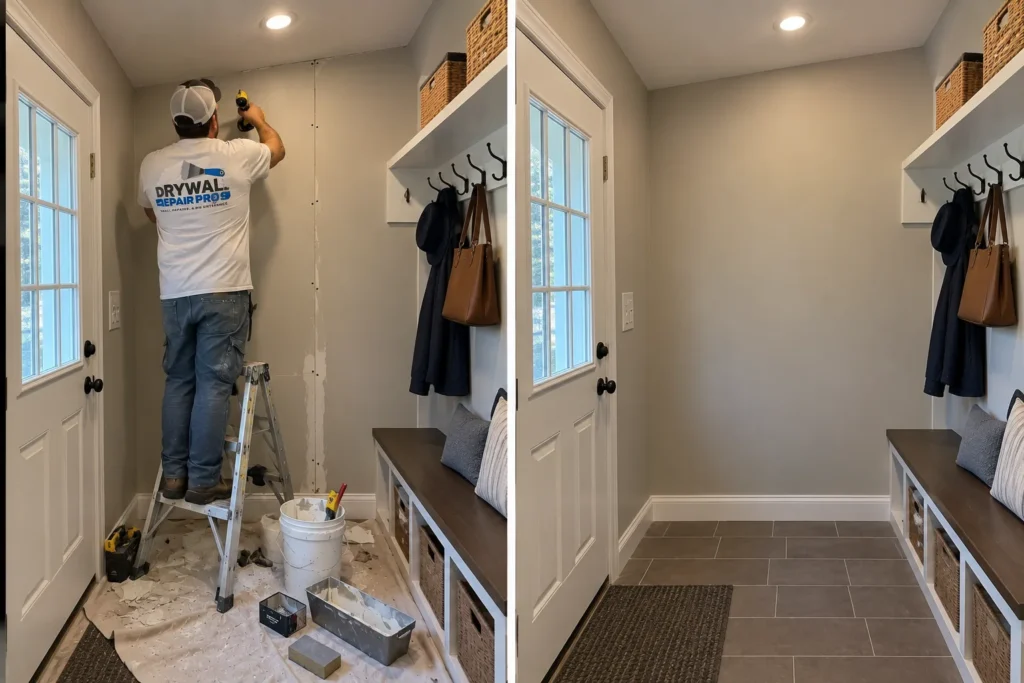
Drywall Repair After Pipe Replacement and Repiping
Replacing old piping or repiping part of a home can require multiple wall and ceiling openings. These openings may be located in bathrooms, kitchens, laundry rooms, basements, utility rooms, hallways, and ceilings below plumbing runs.
When several access holes are part of the same plumbing project, they can often be reviewed together for pricing. Send photos and approximate dimensions for each opening so the overall repair scope can be evaluated efficiently.
Drywall Repair After Burst-Pipe Access
A burst pipe often creates two separate drywall issues: the opening made to access the pipe and any drywall that was actually damaged by water. Once the plumbing work is complete, we can close and finish the access opening so the surface is ready for paint. Soft, swollen, sagging, stained, or structurally weakened drywall should be treated as water-damage work instead of simply being patched closed.
The plumbing problem should be corrected and affected areas should be appropriately dry before permanent drywall restoration.
Drywall Repair After Supply-Line and Drain-Line Work
Supply lines and drain lines are frequently located behind finished walls and above ceilings. Repair may involve closing wall cutouts, ceiling openings, narrow access strips, or larger removed sections after the plumbing work is complete.
The repair approach depends on the size and shape of the opening, surrounding drywall condition, available framing or backing, and whether the surface is smooth or textured.
Wall Drywall Repair After Plumbing Work
Wall access is common behind sinks, toilets, showers, tubs, washing machines, water heaters, and plumbing chases. Once the plumbing is complete, the opening can be restored with supported drywall and properly finished joints.
Walls also tend to show patch outlines when the repair is too narrow, sits high or low, or is not feathered far enough. The finished repair should transition gradually into the surrounding wall rather than leaving a visible rectangular shape.
Drywall Repair Behind Sinks, Vanities and Cabinets
Plumbing repairs under sinks or behind vanities may leave openings inside cabinets or on adjacent finished walls. Some openings remain concealed after the cabinet is reinstalled, while others are visible and require full finishing.
When an opening will remain permanently accessible for a shutoff, cleanout, or service point, a removable access panel may be more practical than permanently closing the area with drywall.
Drywall Repair Around Tubs and Showers
Tub and shower plumbing repairs may require wall openings near valves, drains, supply lines, or the back side of the fixture wall. After the plumbing work is complete, damaged drywall edges, access openings, joint areas, and surrounding texture can be restored.
Ceiling Drywall Repair After Plumbing Work
Plumbing between floors often requires access through the ceiling below. Common examples include bathroom drains, tub and shower plumbing, supply lines, toilets, hidden piping, and leak investigation.
Ceiling repairs need secure support because gravity acts continuously on the patch. Drywall thickness, joist location, backing, fastener placement, joint layout, feathering, ceiling height, and texture all affect the repair.
Ceiling Access Hole Repair After Plumbing
A ceiling access opening may be small and rectangular or extend across a larger section where plumbing had to be exposed. After the plumbing is complete, the opening can be supported, patched, taped, finished, sanded, and textured as appropriate.
If the ceiling drywall is also soft, swollen, sagging, or water-damaged, Water-Damaged Ceiling Repair remains the primary page for that moisture-damage repair need.
Want Pricing for a Repair Like This?
Most visible repairs can start with photos. Send the property address, a short description, and up to six images.
Drywall Repair After Bathroom Plumbing Work
Bathrooms generate many plumbing-access repairs because multiple systems are concentrated in a small area. Plumbing work may involve toilets, sinks, tubs, showers, valves, drain lines, supply lines, and fixtures located inside finished walls or above the ceiling below.
Drywall repair may be needed in the bathroom itself, on the opposite side of the plumbing wall, or on the ceiling in the room below.
Drywall Repair After Kitchen and Laundry Plumbing Work
Kitchen and laundry repairs may require access behind sinks, dishwashers, refrigerators, washing machines, utility sinks, or supply and drain lines. Once the plumbing work is complete, wall or ceiling openings can be restored.
If appliances leaked and damaged the drywall itself, the moisture-damage portion should be evaluated separately from the access opening.
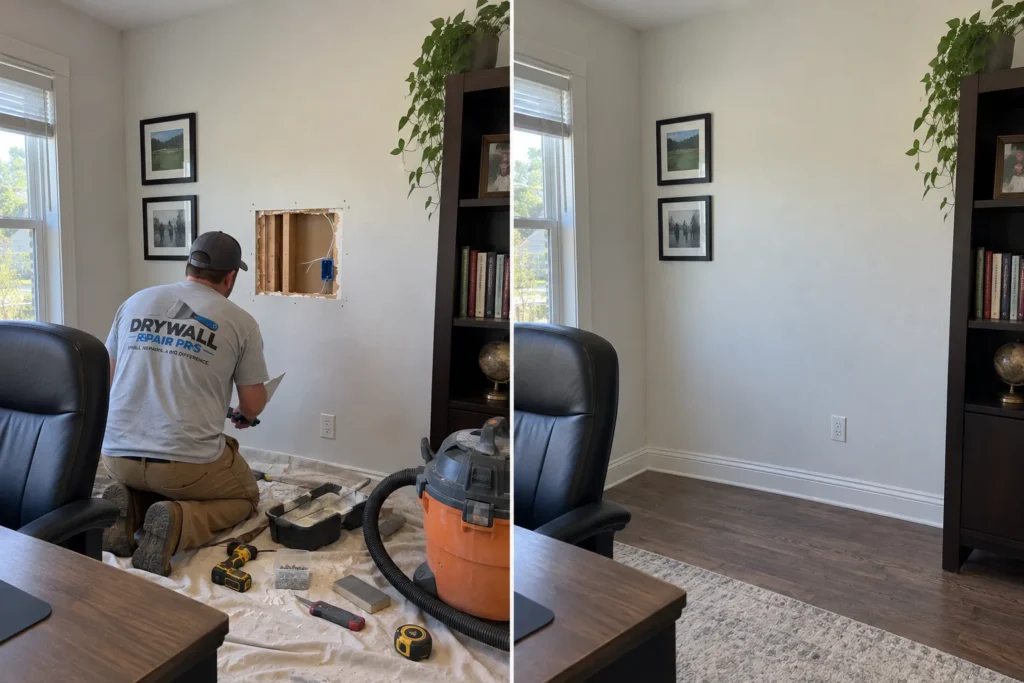
Repairing Drywall Around Plumbing Penetrations
Pipes, valves, cleanouts, escutcheons, and other plumbing penetrations sometimes leave oversized or irregular drywall openings. The surrounding surface may need to be squared, supported, patched, or refinished so the final opening fits the plumbing component more cleanly.
The goal is not to interfere with plumbing access or required clearance. Drywall restoration should complement the completed plumbing work, not conceal components that need future service.
Should a Plumbing Access Opening Be Patched or Covered With an Access Panel?
Not every plumbing opening should be permanently closed. If the area is unlikely to require routine access, a finished drywall patch may be appropriate. If valves, cleanouts, shutoffs, traps, or other components may need future service, a removable access panel can be the better choice.
That decision should be made before final drywall finishing so the repair does not have to be opened again unnecessarily.
Texture Matching After Plumbing Work
Plumbing access often leaves a smooth repair in the middle of a textured wall or ceiling. After the drywall patch and joints are properly finished, the surrounding texture can be recreated or blended as closely as practical.
For broader wall or ceiling texture problems, see our texture repair services. On plumbing-related projects, texture restoration is included when it is part of closing and finishing the access area.
Repairing Previous Plumbing-Access Patches
Old plumbing patches can remain visible or fail over time. Common problems include cracked edges, loose tape, raised compound, sunken patches, poor backing, visible rectangular outlines, texture mismatch, and movement when pressed.
A failed patch may need to be rebuilt rather than simply skimmed again. Stabilizing the patch and correcting the joint structure comes before cosmetic refinishing.
Drywall Repair After Plumbing Work Before Painting or Selling
Fresh paint can make patch outlines, ridges, sanding marks, and texture differences more noticeable. Plumbing-access repairs should be secure, properly feathered, sanded, textured where needed, and prepared before final coating.
Visible plumbing patches can also attract attention during real-estate photos and showings. Repairing the openings before painting or listing produces a cleaner finished appearance.
Drywall Repair After Plumbing Work in Cedar Rapids
Drywall Repair Pros provides drywall repair after plumbing work throughout Cedar Rapids and surrounding communities. Common projects include wall and ceiling access-hole repair, drywall repair after pipe replacement, patching after plumber cutouts, repairs after bathroom and kitchen plumbing work, and texture restoration after plumbing access.
Drywall Repair After Plumbing Work in Iowa City
We also provide drywall repair after plumbing work throughout Iowa City and surrounding communities for homeowners, landlords, property managers, rental properties, apartments, and commercial interiors. We repair plumbing access openings, ceiling cutouts, wall patches, repiping openings, and drywall affected by completed plumbing work.
Our Drywall Repair After Plumbing Work Process
Confirm the plumbing work is complete. Permanent drywall restoration should wait until the plumber no longer needs access to the cavity.
Review photos and measurements. We evaluate the opening size, wall or ceiling location, drywall thickness, surrounding condition, finish type, and whether the original cutout remains available.
Determine whether backing or framing support is needed. Replacement drywall should be securely supported rather than relying on joint compound alone.
Prepare the opening. Loose paper, broken gypsum, irregular edges, or damaged material are corrected as needed before patching.
Install and secure replacement drywall. The patch is fitted and fastened at the correct plane relative to the surrounding wall or ceiling.
Tape, finish, and feather the joints. Compound is built gradually and extended beyond the opening to reduce a visible patch outline.
Sand, inspect, and correct surface variation. High spots, ridges, depressions, and visible edges are addressed before texture.
Restore texture when needed and prepare for the next finish.
Frequently Asked Questions About Drywall Repair After Plumbing Work
Can you repair drywall after a plumber cuts a hole?
Yes. Once the plumbing work is complete, most access openings can be patched and finished. The repair method depends on the opening size, surrounding drywall, available support, and finish.
Can the original drywall cutout be reused?
Sometimes. If the cutout is intact, dry, undamaged, correctly sized, and can be properly supported, it may be reusable. A new piece may be better when the original section is broken, wet, distorted, or poorly cut.
Should drywall be repaired before the plumber is finished?
No. Final drywall restoration should generally wait until the plumber confirms that access is no longer needed.
Can you repair multiple plumbing access holes at once?
Yes. Multiple openings from repiping, leak investigation, bathroom work, or other plumbing projects can often be grouped into one repair scope.
Can ceiling holes from plumbing work be repaired?
Yes. Ceiling access holes can be securely patched after the plumbing work is complete. Proper backing, fastening, finishing, and texture matching are especially important overhead.
Do plumbing access holes always need an access panel?
No. Some openings can be permanently patched, while others should remain accessible for future service. The plumbing component and expected maintenance needs determine which approach makes sense.
Can texture be matched after a plumbing access repair?
Yes. After the drywall is stable and properly finished, existing wall or ceiling texture can usually be blended or recreated as part of the repair.
What if the plumber found water-damaged drywall?
Water-damaged material should be evaluated separately from the access opening. Soft, swollen, sagging, crumbling, or structurally weakened drywall may require removal rather than simple patching. For moisture-damaged material, see our Water-Damaged Drywall Repair service.
Can you quote drywall repair after plumbing work from photos?
Usually. Clear close-up and wider photos, approximate dimensions, wall or ceiling location, whether the plumbing work is complete, and information about texture can often provide enough detail for initial pricing.
How much does drywall repair after plumbing work cost?
Cost depends on the number and size of openings, wall versus ceiling location, ceiling height, access, backing needs, drywall thickness, texture, previous repairs, and the amount of finishing required. Plumbing costs are separate from the drywall restoration.
Get a Fast Drywall Repair Quote After Plumbing Work
If a plumber opened your wall or ceiling to repair or replace pipes, valves, drains, fixtures, or other plumbing components, send us photos and basic project details after the plumbing work is complete.
For the fastest review, include:
- A close-up photo of each drywall opening
- A wider photo showing the surrounding wall or ceiling
- Approximate width and height of each opening
- Whether the opening is on a wall or ceiling
- Approximate ceiling height for ceiling repairs
- Confirmation that the plumbing work is complete
- Whether the original drywall cutout is still available
- Whether the surrounding drywall is dry and structurally sound
- Whether the surface is smooth, textured, or popcorn
- Photos of any additional drywall repairs you want included
For many visible plumbing-access repairs, this is enough information for initial pricing, often the same day. If hidden deterioration, missing support, or water damage becomes apparent during the repair, the final scope can be adjusted accordingly.
Drywall Repair Pros serves Cedar Rapids, Iowa City, and surrounding communities. Upload your photos and project details to request your free drywall repair quote after plumbing work.