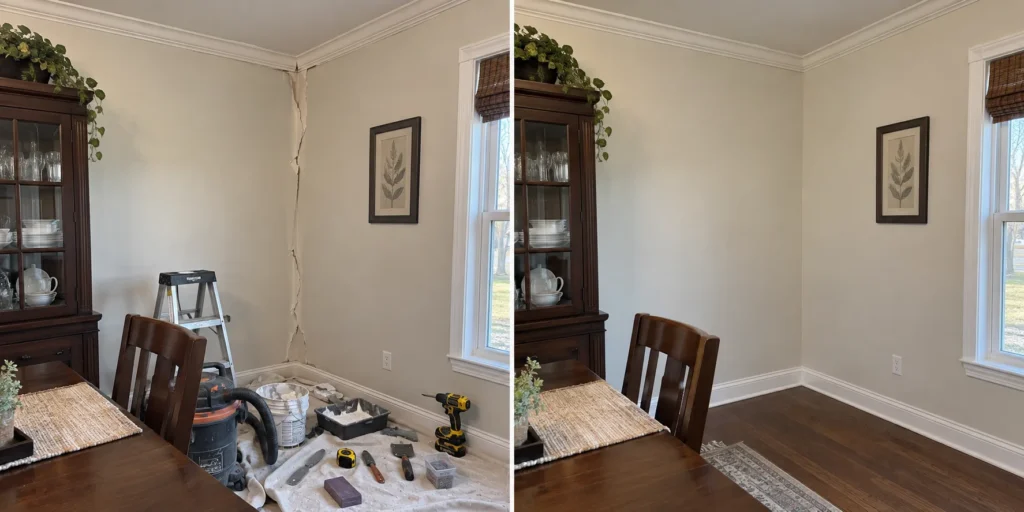
Why Texture Matching Matters
After a hole or damaged drywall section is structurally repaired, the surrounding finish often determines whether the repair still catches the eye. Texture matching is not just choosing a product name; pattern, size, density, application, paint buildup, previous repairs, and lighting all affect the appearance.
Common Texture Variables
- Fine versus heavy texture
- Random versus directional pattern
- Wall versus ceiling application
- Multiple layers of paint over older texture
- Previous patch areas with a different pattern
- Knockdown, orange-peel-like, stippled, popcorn, or other existing finishes
- Transition width around the repair
Can New Texture Match Old Texture Exactly?
The goal is to reproduce and blend the existing appearance as closely as practical, but aged and repeatedly painted surfaces can vary even within the same room. A broader blend area may sometimes be less noticeable than trying to stop a new texture abruptly at the edge of a small patch.
Lighting Changes What You See
Side lighting from windows, lamps, and ceiling fixtures can exaggerate ridges, smooth spots, texture differences, and sanding transitions. Photograph the surface both in normal room lighting and from an angle that reveals the pattern.
Wall Texture vs. Ceiling Texture
Ceilings often have larger uninterrupted viewing areas and different lighting. Ceiling texture repair has its own service information, while popcorn ceiling repair and popcorn ceiling removal are handled separately.
How to Photograph Texture for an Estimate
- One wide photo showing the room and repair location
- One medium photo showing the texture around the damaged area
- One close-up with the texture pattern in focus
- An angled photo with side lighting when useful
- A photo of another undamaged area that appears to use the same texture
Need the Texture Repaired?
Send photos of the damaged area, the property address, and a short description of what happened. Clear wide, medium, and close-up photos can often provide enough information to establish an initial repair scope without adding an unnecessary first visit.
Texture Terms Customers Commonly Use
- Orange peel drywall texture
- Knockdown drywall texture
- Knockdown ceiling texture
- Stipple or stippled ceiling texture
- Hand-applied drywall texture
- Splatter texture
- Popcorn or acoustic ceiling texture
- Smooth wall or smooth ceiling finish
Why a Small Patch Can Need a Larger Blend Area
The structural patch boundary and the visual blend boundary are not always identical. A small opening may require a wider feathered finish or texture blend so the transition does not stop abruptly at the edge of the patch. Existing paint layers and side lighting can make that difference more noticeable.
Frequently Asked Questions
Can orange peel texture be matched?
Often, but droplet size, density, paint buildup, and application affect the match.
Can knockdown texture be repaired locally?
Localized repair may be practical depending on the existing pattern and blend area.
Why does ceiling texture look different from wall texture?
Lighting, viewing angle, pattern scale, and application can make the same general texture read differently overhead.
Can you texture only the patch?
Sometimes the visual blend needs to extend beyond the structural patch boundary.
Should I photograph texture with the flash on?
Use normal lighting plus an angled or side-lighted photo when possible; harsh flash alone can distort the appearance.