
Professional Flooring & Trim Drywall Repair in Cedar Rapids & Iowa City
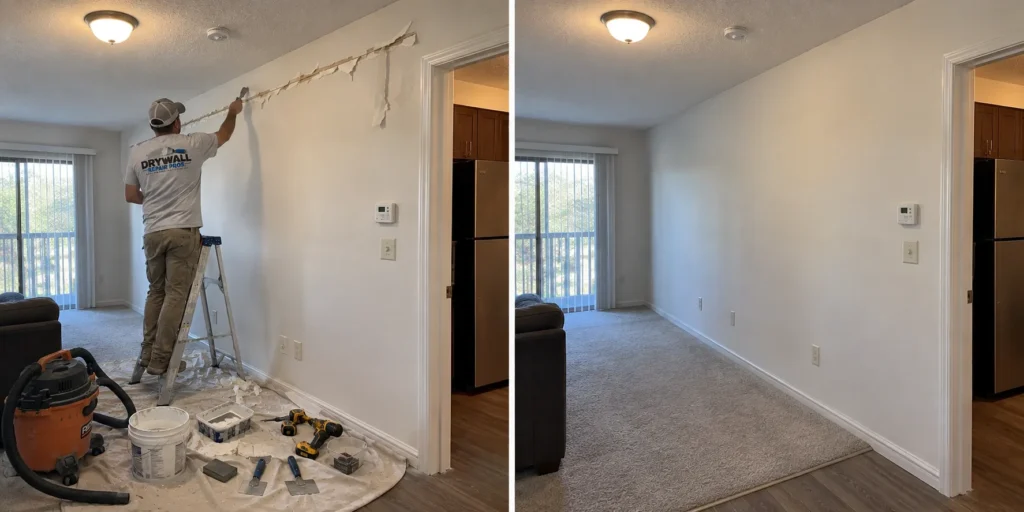
Flooring, baseboard, molding, and finish-carpentry projects can expose drywall that was previously hidden or create new damage along finished wall edges. Nail holes, torn drywall paper, old paint lines, adhesive, gaps, unfinished surfaces, and previous patches often become visible once old trim is removed.
Drywall Repair Pros restores these areas after flooring and interior finish work throughout Cedar Rapids, Iowa City, and surrounding communities. Many visible repairs can be evaluated from clear photos for same-day initial pricing.
Drywall Repair After Flooring Installation
New flooring often changes the relationship between the floor, baseboard, shoe molding, and finished wall. When old trim is removed, damage that was hidden for years may suddenly be visible above or behind the new flooring.
We repair drywall after hardwood, luxury vinyl plank (LVP), laminate, carpet, and other flooring projects when the flooring or related trim work leaves the wall damaged or unfinished.
- Nail and screw holes after baseboard removal
- Torn or peeled drywall paper
- Old paint and caulk lines
- Cracked or missing joint compound
- Gaps exposed by different-height trim
- Previous patches hidden behind baseboards
- Localized dents, chips, and damaged wall edges
- Unfinished drywall exposed by flooring changes
Drywall Repair After Removing or Replacing Baseboards
Baseboard work is one of the most common reasons lower-wall drywall needs repair. Removing old baseboards can pull away paper or compound, expose fastener holes, reveal old repairs, and uncover wall areas that were never finished for direct exposure.
Drywall Behind Baseboards
Damage behind old baseboards may not matter while it remains covered. Once the trim is removed, however, the new baseboard may be shorter, thinner, positioned differently, or installed at a different height. Areas that will remain visible should be repaired before the final finish.
Drywall Around New Baseboards
New trim should meet a stable, reasonably even wall surface. Localized repair can address holes, torn paper, ridges, missing compound, and visible transitions around the finished baseboard.
Old vs. New Baseboard Height
A shorter new baseboard can expose a horizontal strip that the old trim concealed. Photos showing both the old paint line and the planned new trim height help determine how much wall repair will remain visible.
Drywall Repair After Trim & Molding Work
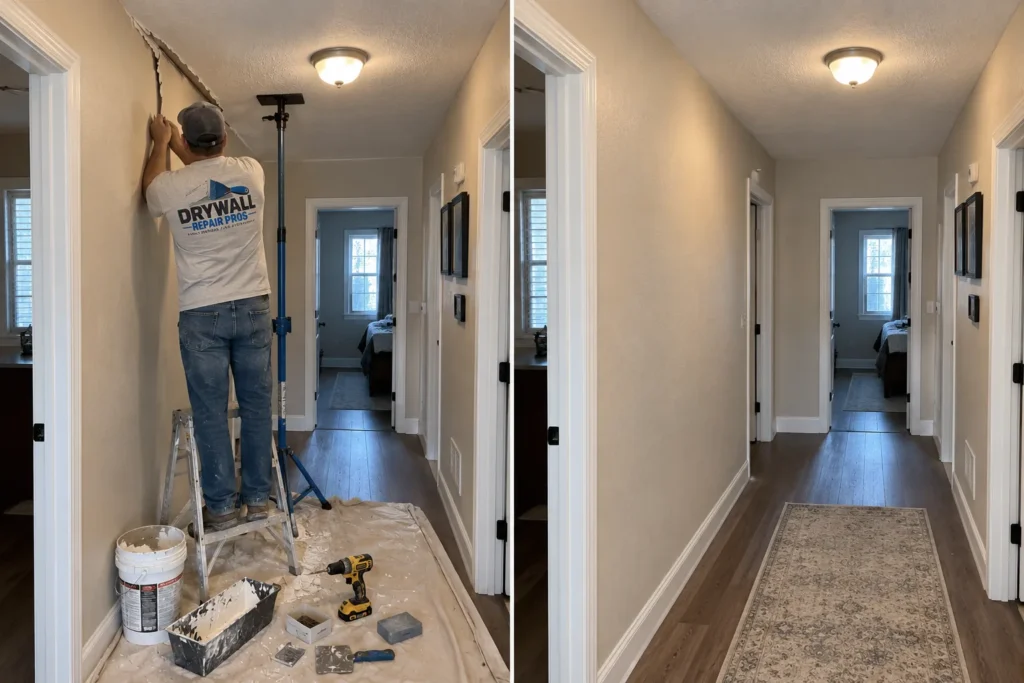
Trim and molding installation or removal can disturb drywall at fastener points and along highly visible wall transitions. This includes general wall trim, crown molding, decorative molding, casing, and other finish-carpentry details.
- Drywall repair after trim removal
- Drywall repair after trim replacement
- Drywall around molding and decorative trim
- Drywall repair after crown molding removal
- Fastener holes from finish carpentry
- Damaged drywall paper from trim removal
- Old caulk, adhesive, and paint boundaries
Crown Molding Removal & Replacement
Removing crown molding can expose nail holes, damaged paper, caulk lines, paint differences, or unfinished drywall along the upper wall and ceiling transition. If replacement molding does not cover the same footprint, the exposed surface may need repair before painting.
Door & Window Casing
General casing and finish-carpentry damage can be supported here when trim work is the main cause. For drywall damage caused by window or door replacement, see our Drywall Repair After Window & Door Installation service.
Torn Drywall Paper After Trim Removal
Baseboards, molding, paneling, and other finishes can pull away the drywall's paper facing. Simply coating loose or torn paper with joint compound can create bubbling, roughness, or an unstable finish.
The damaged area should be evaluated, loose material prepared appropriately, and the surface stabilized before finishing. The exact repair depends on how deeply the paper is damaged and whether the gypsum core remains sound.
This is a useful distinction because some post-trim projects need more than filling nail holes—the exposed wall surface itself may require preparation before it can be finished smoothly.
Drywall Repair After Wainscoting, Beadboard & Wall Panel Removal
Wainscoting, beadboard, and interior wall panels can cover a large portion of a wall. Removing them may reveal adhesive, fastener holes, torn paper, old paint boundaries, unfinished seams, missing texture, or drywall that was never intended to remain exposed.
When damage is scattered across a broad wall area, the best solution may involve more surface preparation and feathering than a collection of isolated spot patches.
- Drywall repair after wainscoting removal
- Drywall repair after beadboard removal
- Drywall repair after wall-panel removal
- Adhesive and fastener damage
- Torn paper and exposed gypsum
- Uneven surfaces and old finish lines
Want Pricing for a Repair Like This?
Most visible repairs can start with photos. Send the property address, a short description, and up to six images.
Drywall Repair After Finish Carpentry
Finish carpentry can include baseboards, crown molding, wall trim, built-ins, shelving, decorative molding, and other interior features. Installation or removal may leave localized drywall damage around attachment points or transitions.
Built-Ins & Shelving
Installing or removing built-ins and larger shelving systems can leave anchors, screw holes, damaged paper, old paint outlines, and unfinished areas. This service is a good fit when flooring, trim, or finish carpentry work leaves drywall that needs patching and refinishing.
Interior Finish Removal
Removing older finishes can reveal layers of previous work. The wall may contain patches, adhesive, old fastener patterns, texture differences, or unfinished areas that require preparation before the next coating or finish.
Should Drywall Be Repaired Before or After New Trim?
The best sequence depends on what the new trim will cover and whether installing it could damage the repaired surface.
- If damaged drywall will remain visible above or beside the new trim, repairing it before final trim installation can produce a cleaner result.
- If flooring or carpentry work could still disturb the wall, waiting until that work is complete can prevent a fresh repair from being damaged again.
- If the old trim is already removed, photos showing the exposed wall and planned new trim dimensions can help determine the best sequence.
- Painting sequence may also depend on whether the trim is prefinished, painted in place, or not yet installed.

Drywall Repair Before Painting After Flooring or Trim Work
Once the flooring and finish work affecting the wall is complete, drywall repairs can be finished before the final paint. Proper surface preparation matters because strong side lighting and fresh paint can make ridges, torn paper, patch edges, and old trim lines more visible.
Texture can be restored where necessary, but texture should follow a stable drywall repair rather than be used to hide damaged paper or uneven patch work.
Flooring & Trim Work vs. Broader Remodeling
We repair drywall damage caused by flooring work, baseboards, trim, molding, wainscoting, beadboard, wall panels, and finish carpentry.
Broader renovation projects involving wall removal, room reconfiguration, multiple trades, or extensive new drywall belong under Drywall Repair After Remodeling. Window- and door-installation damage belongs under the dedicated Window & Door page. We focus on the wall and ceiling damage left behind after flooring, trim, or finish work is complete.
Our Flooring & Trim Drywall Repair Process
Review the flooring, trim, molding, or finish work that caused or exposed the drywall damage.
Identify which areas will remain visible after the final trim is installed.
Evaluate holes, torn paper, adhesive, loose material, previous patches, and unfinished surfaces.
Prepare damaged drywall paper and unstable areas.
Patch or replace localized drywall where needed.
Finish, feather, and sand repaired areas to reduce visible transitions.
Restore existing texture where appropriate.
Prepare the wall for primer, paint, and final trim sequencing.
Photo-Based Flooring & Trim Drywall Estimates
These repairs are often well suited to remote initial pricing because the affected wall is visible once the trim or finish has been removed.
For the fastest initial quote, send:
- A wider photo showing the affected wall
- Close-up photos of torn paper, holes, gaps, or damaged areas
- Approximate length and height of the affected wall area
- What flooring, trim, molding, or finish work was performed
- Whether the old baseboards or trim are already removed
- Whether the new trim is installed or still pending
- The height of the old and new baseboard when they differ
- Whether the damaged drywall will remain visible
- Whether the wall is textured
In many cases, clear photos and basic measurements are enough for same-day initial pricing. Extensive hidden damage, adhesive-covered walls, unfinished surfaces behind large wall treatments, or incomplete carpentry work may require additional evaluation before the final scope is confirmed.
Drywall Repair After Flooring & Trim Work in Cedar Rapids & Iowa City
Drywall Repair Pros provides flooring-, baseboard-, trim-, molding-, and finish-carpentry-related drywall repair throughout Cedar Rapids, Iowa City, and surrounding communities.
Common projects include drywall repair after flooring installation, drywall repair after floor installation, drywall repair after removing baseboards, drywall repair after replacing baseboards, drywall repair behind baseboards, drywall repair around baseboards, drywall repair after trim removal, drywall repair around trim, drywall repair after crown molding removal, drywall repair after wainscoting or beadboard removal, drywall repair after finish carpentry, throughout Cedar Rapids, Iowa City, and nearby communities.
Frequently Asked Questions
Can you repair drywall after flooring installation?
Yes. Damage exposed during flooring and baseboard work can often be repaired without replacing the entire wall.
Can you repair drywall after removing baseboards?
Yes. Nail holes, torn paper, old paint lines, missing compound, and previous damage can be repaired where the wall will remain visible.
Can you repair drywall behind baseboards?
Yes. Once the trim is removed, the exposed wall can be evaluated and repaired as needed.
What if the new baseboard is shorter than the old one?
A shorter baseboard can expose a strip of unfinished or damaged wall. That visible area can often be repaired and prepared for paint.
Can torn drywall paper from trim removal be repaired?
Often, yes. Loose material should be prepared and the damaged surface stabilized before finishing so the repair does not bubble or remain rough.
Can you repair drywall after crown molding removal?
Yes. Fastener holes, damaged paper, caulk lines, and exposed finish differences along the upper wall can often be restored.
Can you repair drywall after wainscoting or beadboard removal?
Yes. Because these finishes can cover large wall areas, the underlying drywall may need localized repairs or broader surface preparation.
Can you repair drywall after removing wall panels?
Yes. The wall should first be evaluated for adhesive, torn paper, unfinished seams, and other concealed conditions.
Can you repair drywall after finish carpentry?
Yes. Drywall damaged or exposed by completed baseboard, molding, built-in, shelving, or other finish-carpentry work can often be restored.
Should drywall be repaired before new baseboards are installed?
Often, if damaged wall will remain visible. The best sequence depends on what the new trim will cover and whether later installation could disturb the repair.
Can textured drywall be repaired after flooring or trim work?
Yes. Existing texture can often be restored after the underlying drywall repair is properly finished.
How much does drywall repair after flooring or trim work cost?
Pricing depends on the amount of exposed damage, wall length, torn paper or adhesive, number of repair areas, trim sequence, texture, and surface preparation. Photos and measurements can often support an initial quote.
Get a Free Flooring & Trim Drywall Repair Estimate
If flooring, baseboard, molding, trim, wainscoting, beadboard, paneling, or finish-carpentry work left drywall damaged or unfinished, send us clear photos and basic measurements.
Tell us what work was performed, whether old trim is removed, whether new trim is installed, how much of the wall will remain visible, and whether texture is present. We can often provide same-day initial pricing from photos.
Request your free flooring and trim drywall repair estimate in Cedar Rapids, Iowa City, or a surrounding community.