
Professional Post-Remodel Drywall Repair in Cedar Rapids & Iowa City
Remodeling can leave walls and ceilings with openings, unfinished transitions, exposed seams, damaged drywall paper, missing texture, old patches, and places where new drywall must blend into existing construction. Drywall Repair Pros restores those areas after the major remodeling work is complete so the room is ready for its final finish.
We provide drywall repair after remodeling and renovation projects throughout Cedar Rapids, Iowa City, and surrounding communities. Many visible post-remodel repairs can be evaluated from clear photos, allowing us to provide initial pricing the same day in many cases.
Post-Remodel Drywall Repair
A remodel often creates several different drywall conditions at once. A removed wall may leave a ceiling strip and two wall transitions. A closed doorway creates a large new wall section. Cabinet, backsplash, tile, trim, or soffit removal may expose damaged paper, adhesive, holes, unfinished joints, or texture differences.
The goal is not simply to fill individual holes. It is to restore the affected walls and ceilings as one finished surface, with the new work blended into the surrounding construction.
- Drywall repair after remodeling or renovation
- Wall-removal and wall-relocation repairs
- Closing old doorways and openings
- Kitchen, bathroom, and basement remodel drywall repair
- Drywall repair after cabinet, backsplash, tile, paneling, or trim removal
- Ceiling repairs after soffit or drop-ceiling removal
- New drywall blended into existing walls and ceilings
- Remodeling-related seams, corners, patches, and texture restoration
Drywall Repair After Removing or Moving a Wall
Removing or relocating an interior wall can leave one of the most noticeable post-remodel drywall conditions. The former wall location may affect the ceiling, adjacent walls, corners, base areas, and the transition between old and new surfaces.
Once framing and other construction work are complete, the affected areas can be rebuilt and finished so the former wall line does not remain as an obvious strip or ridge.
Drywall Repair After Wall Removal
Wall removal commonly leaves missing drywall, rough edges, fastener damage, old joint lines, and ceiling or wall areas that were never finished because they were previously hidden. The repair may require new drywall, joint reinforcement, wider feathering, texture restoration, and paint preparation.
Drywall Repair After Moving a Wall
Relocating a wall creates work at both the old and new locations. The old wall footprint may need to be restored while the new wall introduces fresh joints and transitions. Coordinating those areas as one finishing project helps produce a more consistent result.
Drywall Repair After Room Reconfiguration
Combining rooms, changing traffic flow, or creating a more open layout can produce several repair areas at once: closed openings, new openings, ceiling patches, old wall lines, new corners, and transitions between existing and replacement drywall.
Drywall Repair After Closing or Creating Openings
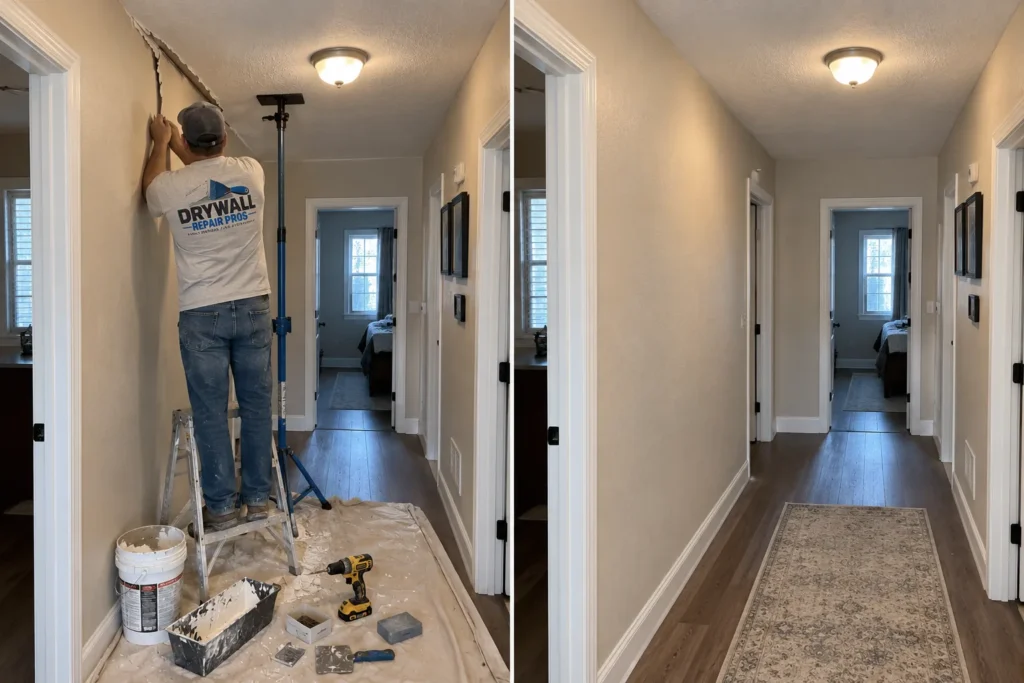
Closing a Doorway
Closing an unused doorway creates a large wall section that must be integrated into the surrounding surface. After the opening is properly framed, drywall can be installed, joints reinforced and feathered, texture restored when needed, and the surface prepared for primer and paint.
Creating a New Doorway or Wall Opening
A new doorway, pass-through, or architectural opening can leave unfinished drywall edges and corners. Once framing and related construction are complete, the surrounding drywall can be finished to create clean transitions.
Closing Other Remodel Openings
Remodeling may leave former niches, access openings, fixture locations, or other unused wall and ceiling openings. The correct repair depends on the opening size, backing or framing, surrounding drywall condition, and final finish.
Kitchen Remodel Drywall Repair
Kitchen remodeling often affects drywall in several locations at once. Cabinet removal, backsplash demolition, appliance changes, plumbing, electrical upgrades, window work, and wall changes can expose or damage previously hidden surfaces.
- Drywall after cabinet removal or replacement
- Backsplash and tile-removal damage
- Old fastener holes and adhesive
- Openings from plumbing or electrical changes
- Wall changes around appliances or doorways
- New drywall meeting existing kitchen walls
Bathroom Remodel Drywall Repair
Bathroom renovations can disturb drywall around vanities, mirrors, tubs, showers, toilets, cabinets, tile, plumbing, electrical fixtures, and doorways. After the underlying remodeling work is complete, damaged or unfinished drywall can be restored before final coatings and trim.
Moisture-damaged drywall is a separate condition from ordinary remodeling damage. If an active or previous leak caused soft, swollen, stained, or deteriorated drywall, the water source and material condition should be addressed before cosmetic restoration.
Want Pricing for a Repair Like This?
Most visible repairs can start with photos. Send the property address, a short description, and up to six images.
Basement Remodel & Home Addition Drywall Repair
Basement Remodeling
Basement projects can involve new rooms, doors, utility transitions, ceiling work, and connections between existing and newly finished areas. Post-remodel repair may include both localized restoration and finishing new drywall where it meets older construction.
Home Additions
An addition creates transitions between new and existing walls and ceilings. These areas often need careful joint finishing, feathering, texture matching, and surface preparation so the connection between old and new construction is less noticeable.
Drywall Repair After Cabinet, Tile & Finish Removal
Cabinet Removal
Removing cabinets can expose screw holes, anchors, adhesive, unfinished drywall, missing paint, texture differences, and old patches. Some areas need only localized repair; others require broader surface preparation before new cabinets or paint.
Backsplash or Tile Removal
Tile and backsplash removal can tear drywall paper, leave adhesive, expose seams, or damage the gypsum surface. Depending on the condition, the area may be repaired, resurfaced, or partially replaced before the new finish is installed.
Paneling, Wallpaper & Trim Removal
Paneling, wallpaper, and trim can hide older repairs or unfinished drywall. Removal may reveal nail holes, adhesive, torn paper, uneven joints, old paint lines, or texture differences. These conditions can often be handled as part of the same post-renovation drywall restoration project.
Ceiling Drywall Repair After Remodeling
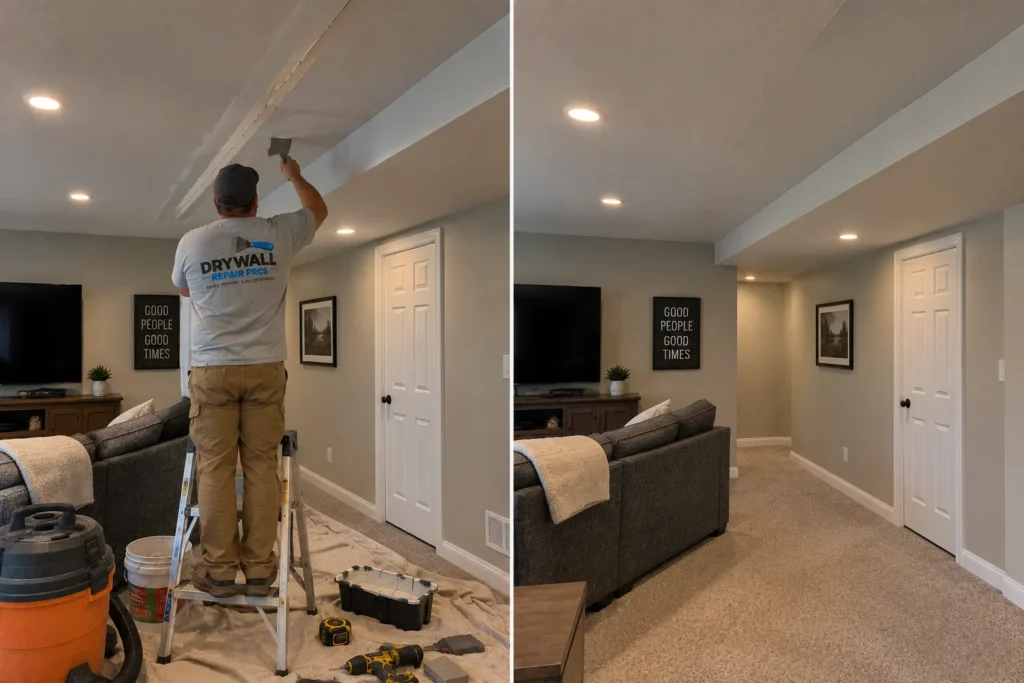
Ceiling changes can be especially visible because broad lighting makes ridges, patch edges, and texture differences easier to see. Remodeling may affect ceilings when soffits, dropped ceilings, walls, lighting, vents, or other features are changed.
Drywall Repair After Soffit Removal
Removing a soffit can expose framing or unfinished wall and ceiling surfaces. New drywall may be needed across the former soffit location, followed by joint finishing and texture restoration.
Drywall Repair After Removing a Drop Ceiling
A suspended or dropped ceiling may conceal unfinished surfaces above it. After removal, the exposed ceiling condition determines whether localized repair, new drywall installation, broader finishing, or texture work is appropriate.
Old Ceiling to New Ceiling Transitions
Where new ceiling drywall meets an existing ceiling, joint width, feathering, texture, lighting, and the condition of the surrounding finish all affect how noticeable the transition will be.
Blending New Drywall Into Existing Drywall
One of the most important parts of post-remodel drywall work is blending new construction into an older finished room. The drywall itself may be new, but the surrounding walls can contain previous repairs, multiple paint layers, texture, slight waviness, or older finishing methods.
A successful transition considers joint placement, compound width, surface plane, texture, lighting, and the final coating. Wider feathering is sometimes necessary so a repair does not appear as a narrow raised strip after painting.
Seams, Tape, Patches & Corners
Texture Matching After Remodeling
If the existing wall or ceiling is textured, the repaired area may need texture restoration after the drywall and joints are finished. Texture should be treated as the final surface layer, not as a substitute for correcting an uneven or unstable drywall repair.
When Is the Drywall Ready to Be Repaired?
Final drywall restoration is usually best performed after work that could reopen, move, cut, or damage the finished surface is complete.
- Framing changes affecting the repair area are complete
- Plumbing and electrical work affecting the opening are complete
- Windows, doors, cabinets, and major components affecting the drywall are installed
- Openings that must remain accessible have been identified
- New drywall is installed where the project scope calls for it
- The remaining repair areas are accessible
This sequencing reduces the chance that freshly finished drywall will need to be cut open again.
Our Post-Remodel Drywall Repair Process
Review what was remodeled and identify every wall and ceiling repair area.
Confirm the construction affecting those areas is complete.
Evaluate existing drywall, new drywall, openings, seams, corners, paper damage, and texture.
Install replacement drywall or repair damaged sections as appropriate.
Reinforce and finish joints and transitions.
Feather and sand the repaired areas to reduce visible edges and ridges.
Restore existing wall or ceiling texture where appropriate.
Prepare the finished surface for primer and paint.
Photo-Based Estimates for Post-Remodel Drywall Repair
Post-remodel projects are often good candidates for remote initial pricing because the work is visible and can be documented from several angles. Clear photos help us understand whether the project involves isolated patches, large wall transitions, ceiling work, new drywall, texture, or several repair areas.
For the fastest initial estimate, send:
- A close-up photo of each repair area
- A wider photo showing each repair in the room
- Approximate width and height of larger openings or damaged areas
- Whether each area is on a wall or ceiling
- Ceiling height when ceiling work is involved
- What was remodeled or removed
- Whether framing, plumbing, and electrical work are complete
- Whether new drywall has already been installed
- The existing wall or ceiling texture, if any
In many cases, that information is enough for same-day initial pricing. If concealed conditions, incomplete construction, unusual access, or hidden damage could materially change the scope, an on-site evaluation may still be appropriate.
Drywall Repair After Remodeling in Cedar Rapids & Iowa City
Drywall Repair Pros provides post-remodel drywall repair throughout Cedar Rapids, Iowa City, and surrounding communities. We repair drywall after remodeling and renovation work, while specific problems such as holes, cracks, water damage, or texture issues can also be reviewed under their related repair services.
Common projects include drywall repair after remodeling, drywall repair after renovation, post-remodel drywall repair, drywall repair after wall removal, drywall repair after removing or moving a wall, drywall repair after closing a doorway, drywall repair after kitchen remodel, drywall repair after bathroom remodel, drywall repair after basement remodel, and blending new drywall into existing drywall.
Frequently Asked Questions
Can drywall be repaired after remodeling?
Yes. Once construction affecting the repair area is complete, damaged, missing, or unfinished drywall can often be restored without replacing every wall in the room.
Can drywall be repaired after a wall is removed?
Yes. The former wall location can be rebuilt across the affected walls and ceiling and blended into the surrounding surfaces.
Can drywall be repaired after moving a wall?
Yes. Repairs may be needed at the former wall location as well as where new drywall meets existing construction.
Can a closed doorway be made to look like the rest of the wall?
Yes. Proper framing, drywall installation, joint finishing, texture restoration, and final coatings can integrate the former doorway into the surrounding wall.
Can you blend new drywall with existing drywall?
Yes. Joint placement, feathering, texture, surface condition, lighting, and paint preparation all affect how well the transition blends.
Can drywall be repaired after a kitchen or bathroom remodel?
Yes. Drywall around cabinets, tile, fixtures, plumbing, electrical work, openings, and altered walls can be restored after the underlying remodeling work is complete.
Can drywall be repaired after cabinet or backsplash removal?
Yes. Holes, adhesive, torn paper, old patches, and unfinished surfaces can often be repaired before the next finish is installed.
Can ceilings be repaired after soffit or drop-ceiling removal?
Yes. The exposed wall and ceiling areas can be evaluated for new drywall, joint finishing, texture restoration, and paint preparation.
Should plumbing and electrical work be finished first?
Usually, yes. Work that requires continued access through the drywall should be completed before permanent finishing.
How long does post-remodel drywall repair take?
Timing depends on the number and size of repair areas, new drywall required, joint-finishing stages, drying time, ceiling access, texture, and final finish requirements.
How much does drywall repair after remodeling cost?
Pricing depends on the amount of drywall work, number of areas, wall or ceiling location, new drywall required, accessibility, joint finishing, texture, and surface preparation. Photos and dimensions can often provide enough information for an initial quote.
Get a Free Post-Remodel Drywall Repair Estimate
If a remodel left wall or ceiling openings, old wall lines, unfinished transitions, damaged drywall, missing texture, or new drywall that needs to blend into existing construction, send us photos and basic project details.
Tell us what was remodeled, where the drywall work is located, approximate dimensions, whether the areas are walls or ceilings, whether construction is complete, whether new drywall is already installed, and what texture is present. We can often provide same-day initial pricing from clear photos.
Request your free drywall repair after remodeling estimate in Cedar Rapids, Iowa City, or a surrounding community.