
Professional Drywall Tape Repair in Cedar Rapids & Iowa City
Drywall tape is supposed to reinforce joints and corners so the finished surface looks smooth and continuous. When tape starts bubbling, peeling, lifting, cracking, wrinkling, or separating from a wall or ceiling, simply covering it with more joint compound usually does not solve the problem.
Drywall Repair Pros provides professional drywall tape repair for walls and ceilings throughout Cedar Rapids, Iowa City, and surrounding communities. We repair peeling, bubbling, loose, cracked, lifting, wrinkled, visible, and separated drywall tape, including failures at ceiling seams, wall seams, inside corners, previous patches, and areas affected by moisture.
A lasting repair depends on why the tape failed and whether the drywall underneath is stable.
Get a Fast Drywall Tape Repair Quote From Photos
Most visible tape failures can be initially evaluated from photos. Send a close-up photo, a wider photo showing the wall, ceiling, seam, or corner, the approximate length of the damaged area, whether the tape is peeling, bubbling, cracked, wrinkled, or loose, and whether the area has been repaired before.
Also tell us whether there has been water damage, whether the drywall moves when pressed, and whether the surface is smooth or textured. In many cases, we can provide same-day initial pricing without scheduling a separate estimate visit.
Why Does Drywall Tape Fail?
Drywall tape can fail because of poor original installation, insufficient compound beneath the tape, loose drywall, framing movement, seasonal expansion and contraction, moisture exposure, water leaks, poor surface preparation, contaminated surfaces, or previous repair failure.
The visible tape problem is often a symptom of a joint issue beneath it, so the failed area should be evaluated before refinishing.
Common Drywall Tape Problems
Peeling & Lifting Drywall Tape
Peeling or lifting tape may begin at a seam, ceiling joint, inside corner, previous patch, or wall-to-ceiling transition. Once the tape has lost adhesion, coating over the loose edge rarely provides a durable repair. The failed section may need to be removed and replaced.
Bubbling & Loose Drywall Tape
Bubbles form when part of the tape loses contact with the compound below it. They may look like raised pockets, narrow blisters, soft sections, hollow spots, or long shadows. Loose tape may also move when pressed.
The loose section should be corrected before new finishing material is applied.
Cracked & Separated Drywall Tape
A crack running along tape can indicate joint movement, loose drywall, failed compound, framing movement, seasonal movement, or a weak previous repair. If the drywall itself is moving, it may need to be secured before the tape is replaced.
For cracks where tape failure is not the main problem, see Drywall Crack Repair or Ceiling Crack Repair.
Wrinkled or Visible Drywall Tape
Wrinkled tape may show as ripples, raised folds, or distorted joint lines. Tape can also remain visible through paint when finishing is too thin, tape edges sit high, sanding is excessive, feathering is too narrow, or strong side lighting crosses the surface.
The repair may require removing the defective section or refinishing the joint over a wider area.
Wall vs. Ceiling Drywall Tape Repair
Wall Drywall Tape Repair
Wall tape problems commonly occur along horizontal seams, vertical seams, inside corners, previous patches, remodeling transitions, and around framed openings. The repair method depends on whether the tape failure is isolated or related to movement in the wall.
Ceiling Drywall Tape Repair
Ceiling tape can peel, bubble, crack, or loosen along long seams, corners, wall-to-ceiling transitions, and previous ceiling patches. Gravity, overhead movement, and long sightlines can make ceiling tape failures especially noticeable.
For broader ceiling problems, see Ceiling Drywall Repair.
Drywall Tape at Corners & Wall-to-Ceiling Transitions
Inside corners and wall-to-ceiling transitions rely on tape to reinforce the joint. These areas can crack, peel, bubble, separate, or wrinkle because of poor installation, seasonal movement, framing changes, or truss movement.
When the problem involves damaged corner bead or a broken corner profile rather than tape failure, see Drywall Corner & Corner Bead Repair.
Want Pricing for a Repair Like This?
Most visible repairs can start with photos. Send the property address, a short description, and up to six images.
Tape Failure Near Doors & Windows
Door and window openings can concentrate movement in nearby drywall. Tape may fail after framing movement, replacement-window work, remodeling, repeated door movement, or previous cracking.
The surrounding drywall should be stable before the joint is retaped and refinished.
Drywall Tape Failure After Water Damage
Moisture can weaken the compound that holds tape in place. Water-damaged tape may bubble, peel, wrinkle, crack, stain, or separate, and the compound beneath it may become soft.
The leak or moisture source should be corrected and the area should be appropriately dry before final tape repair. For broader moisture damage, see Water-Damaged Drywall Repair, Water-Damaged Ceiling Repair, or Drywall Repair After Roof Leaks.
Tape Failure Around Patches, Remodeling & Trade Repairs
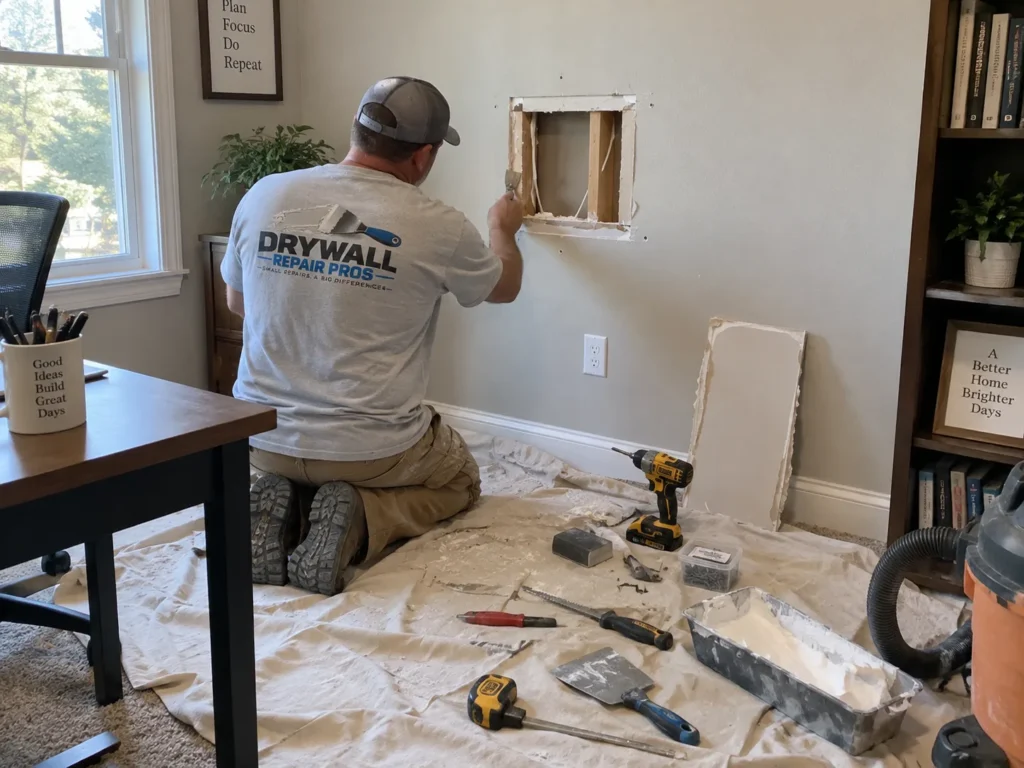
Previous patches, plumbing openings, electrical access repairs, and remodeling create new drywall joints that depend on proper support, fastening, tape, and finishing.
Tape may fail around these repairs when backing is weak, the patch moves, fasteners are inadequate, the tape was poorly embedded, or the transition was finished too narrowly.
For broader project-specific repair, see Drywall Patch Repair, Ceiling Hole & Patch Repair, Drywall Repair After Plumbing Work, Drywall Repair After Electrical Work, or Drywall Repair After Remodeling.
Recurring & Previously Repaired Drywall Tape Problems
Old tape repairs sometimes fail again because the original cause was never corrected. Signs include repeated bubbling, visible tape edges, thick compound buildup, cracking, peeling, and uneven surfaces.
Recurring tape failure may result from ongoing movement, loose drywall, moisture, poor tape embedding, weak surface preparation, or repeated buildup from earlier repairs. Covering loose tape with another coat of compound usually only delays the problem.
Why Does Drywall Tape Bubble or Show Through Paint?
Painting does not usually create a tape failure, but it can make an existing defect easier to see because light reflects differently across raised or uneven areas.
Tape may show through paint because of raised edges, thin finishing, uneven compound, excessive sanding, poor feathering, surface texture differences, or lighting conditions. If the tape is loose underneath, the joint should be repaired before repainting.
Tape Repair on Smooth & Textured Surfaces
Smooth Walls & Ceilings
Smooth surfaces reveal small changes in tape height, compound thickness, feathering, and sanding. A successful repair may need to extend beyond the immediate tape line so the transition into the surrounding surface is more gradual.
Textured Walls & Ceilings
Textured drywall requires two steps: repair the failed tape and joint first, then restore the surrounding texture. Texture should not be used to hide loose or unstable tape.
For texture-focused work, see Drywall Texture Repair & Matching or Ceiling Texture Repair & Matching.
Repair Drywall Tape Before Painting or Selling
Loose, peeling, bubbling, cracked, or visible tape should generally be repaired before final painting. Paint will not reattach loose tape, flatten bubbles, reinforce a moving joint, stop peeling, or correct raised edges.
Visible tape can also make walls and ceilings look unfinished or poorly repaired during showings and listing photography. Correcting the tape and joint before painting creates a better finished surface.
Drywall Tape Repair for Rental Properties
Rental properties may develop tape failures from previous patches, plumbing leaks, ceiling leaks, remodeling, tenant damage, or turnover repairs.
Landlords and property managers can send photos of multiple tape failures at once, including approximate lengths, wall or ceiling location, and whether each area is peeling, bubbling, or cracked. Most visible tape problems can be reviewed remotely for initial pricing.
Commercial Drywall Tape Repair
Commercial interiors can develop tape failures after tenant improvements, remodeling, plumbing or electrical work, mechanical changes, previous repairs, and normal building movement.
Loose or visible tape is especially noticeable in offices, retail spaces, hallways, and other finished interiors with long sightlines and bright lighting.
Drywall Tape Repair in Cedar Rapids
Drywall Repair Pros provides professional drywall tape repair throughout Cedar Rapids and surrounding communities. Common projects include peeling drywall tape, bubbling tape, loose tape, tape coming off walls or ceilings, cracked tape, inside-corner tape problems, tape separation, and visible tape through paint.
Drywall Tape Repair in Iowa City
We provide professional drywall tape repair throughout Iowa City and surrounding communities for homeowners, landlords, property managers, rentals, apartments, and commercial interiors. Services include peeling or bubbling tape, loose ceiling tape, joint tape separation, wall corner tape repair, cracked tape, and recurring tape failures.
Our Drywall Tape Repair Process
Start With Photos and Tape Details
Send a close-up photo, a wider photo showing the location, approximate failed-tape length, whether the problem is on a wall, ceiling, seam, corner, or patch, whether it is peeling, bubbling, cracked, wrinkled, or loose, and whether water damage or a previous repair is involved.
Identify Why the Tape Failed. We review the location, amount of failure, joint condition, drywall movement, moisture history, and previous repairs.
Remove Loose Tape and Unstable Compound. Failed tape and loose finishing material are removed as needed.
Secure Moving Drywall When Necessary. If panel movement is contributing to the failure, the drywall may need additional fastening before retaping.
Retape and Rebuild the Joint. New tape is installed where necessary and the joint is rebuilt in controlled layers.
Feather and Sand the Repair. The finish is widened beyond the tape line to reduce visible transitions and surface buildup.
Restore Texture and Prepare the Surface. Smooth or textured walls and ceilings are prepared for the appropriate final finish.
Should Loose Drywall Tape Be Removed?
Often, yes. Tape that has lost adhesion usually cannot be made reliable simply by covering it with more compound. The loose section may need to be removed so the joint can be properly rebuilt.
The exact repair depends on how much tape has failed and whether the drywall underneath remains stable.
Can Drywall Tape Be Repaired Without Replacing Drywall?
Yes, in many cases. If the drywall panels remain sound and secure, the repair may only require removing the failed tape, retaping the joint, and refinishing the surface.
Drywall replacement becomes more likely when the underlying material is soft, missing, badly damaged, or unstable.
Frequently Asked Questions About Drywall Tape Repair
Can peeling drywall tape be repaired?
Yes. Loose tape can usually be removed and the joint retaped and refinished if the surrounding drywall remains stable.
Why is my drywall tape peeling?
Common causes include poor adhesion, insufficient compound beneath the tape, moisture, joint movement, and previous repair failure.
Can bubbling drywall tape be fixed?
Yes. The loose or bubbled section generally needs to be corrected before the joint is refinished.
Why is drywall tape coming off my ceiling?
Possible causes include moisture, poor original installation, joint movement, loose drywall, or previous repairs.
Can drywall tape be repaired after water damage?
Yes, once the moisture source is corrected, the area is appropriately dry, and the underlying drywall is still suitable for repair.
Why can I see drywall tape through paint?
Raised tape, thin finishing, poor feathering, excessive sanding, texture differences, and directional lighting can make tape visible through paint.
Can inside-corner drywall tape be repaired?
Yes. Failed inside-corner tape can often be removed and replaced without replacing the surrounding drywall.
Can tape around a drywall patch be repaired?
Yes. If the patch itself is stable, the failed tape can often be rebuilt. If the patch moves, the patch may need to be secured first.
Should bubbling tape be cut out?
The loose section often needs to be removed so the joint can be rebuilt properly. The exact amount depends on how far the tape has lost adhesion.
Should drywall tape be repaired before painting?
Yes. Paint does not correct loose, peeling, bubbling, or unstable tape.
Can drywall tape repair be quoted from photos?
Usually. Clear close-up and wider photos, approximate length, wall or ceiling location, type of failure, previous repair history, moisture history, and surface texture can often provide enough information for initial pricing.
How much does drywall tape repair cost?
Cost depends on the amount of failed tape, wall or ceiling location, joint length, accessibility, underlying movement, water damage, texture, and previous repairs. See our Drywall Repair Cost & Pricing Guide for broader pricing information.
Get a Fast Drywall Tape Repair Quote
For most visible tape failures, you can start the pricing process without waiting for a separate on-site estimate. Send clear photos and basic project details so we can review the failed tape and surrounding joint.
For the fastest review, include:
- A close-up photo of the failed tape
- A wider photo showing the wall, ceiling, seam, or corner
- Approximate length of the damaged area
- Whether the tape is peeling, bubbling, cracked, wrinkled, or loose
- Whether the problem has been repaired before
- Whether the drywall moves when pressed
- Whether there has been water damage
- Whether the surface is smooth or textured
- Photos of any additional tape, seam, crack, or patch repairs you want included
In many cases, that information is enough for same-day initial pricing. Drywall Repair Pros serves Cedar Rapids, Iowa City, and surrounding communities.