
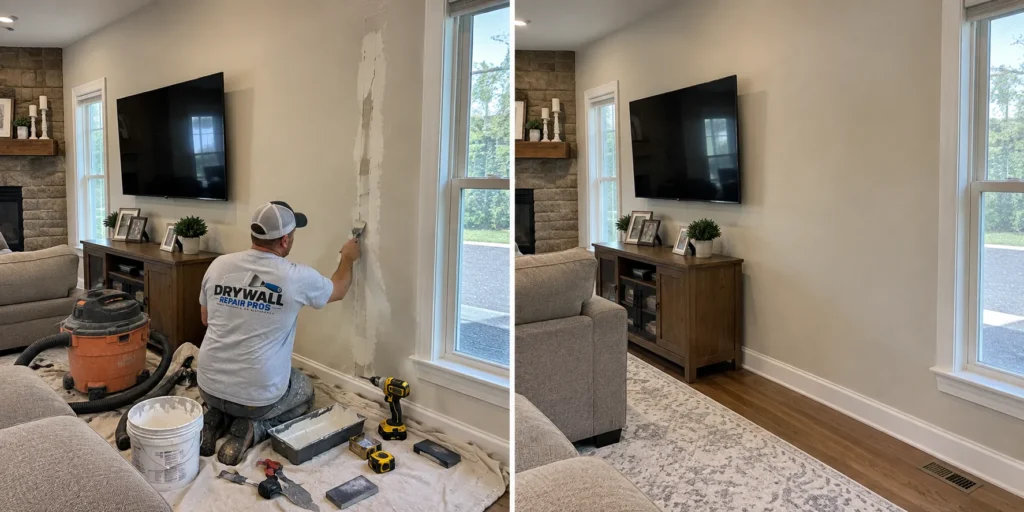
Professional Drywall Seam & Joint Repair in Cedar Rapids & Iowa City
Drywall seams are supposed to disappear. When a joint becomes visible, cracks, separates, develops a ridge, sinks below the surrounding surface, or shows loose tape, something in the joint system is no longer blending or performing as intended.
Drywall Repair Pros provides professional drywall seam and joint repair for walls and ceilings throughout Cedar Rapids, Iowa City, and surrounding communities.
We repair cracked drywall seams, visible joints, raised and sunken seams, separated joints, recurring joint cracks, uneven drywall transitions, failed previous seam repairs, loose joint material, and seam problems on both walls and ceilings.
A good seam repair should do more than hide the line temporarily. The repair should address movement, loose drywall, failed reinforcement, compound buildup, poor finishing, or previous repair failure when those conditions are contributing to the problem.
Get a Fast Drywall Seam & Joint Repair Quote From Photos
Most visible seam and joint problems can be initially evaluated from clear photos and a few details. Send a close-up photo, a wider wall or ceiling photo, approximate seam length, whether the joint is cracked, raised, sunken, separated, or showing tape, and whether the area has been repaired before.
Also note whether the problem is on a wall or ceiling, whether there has been water damage, and whether the surface is smooth or textured. In many cases, we can provide same-day initial pricing without scheduling a separate estimate visit.
Drywall Seam Repair
A drywall seam is the joint where two sheets of drywall meet. During installation, the joint is normally reinforced, covered with joint compound, feathered outward, sanded, and finished so it disappears into the surrounding wall or ceiling.
When part of that system fails, the seam can become visible again as a straight crack, ridge, depression, shadow line, loose tape edge, or uneven transition.
Drywall Joint Repair
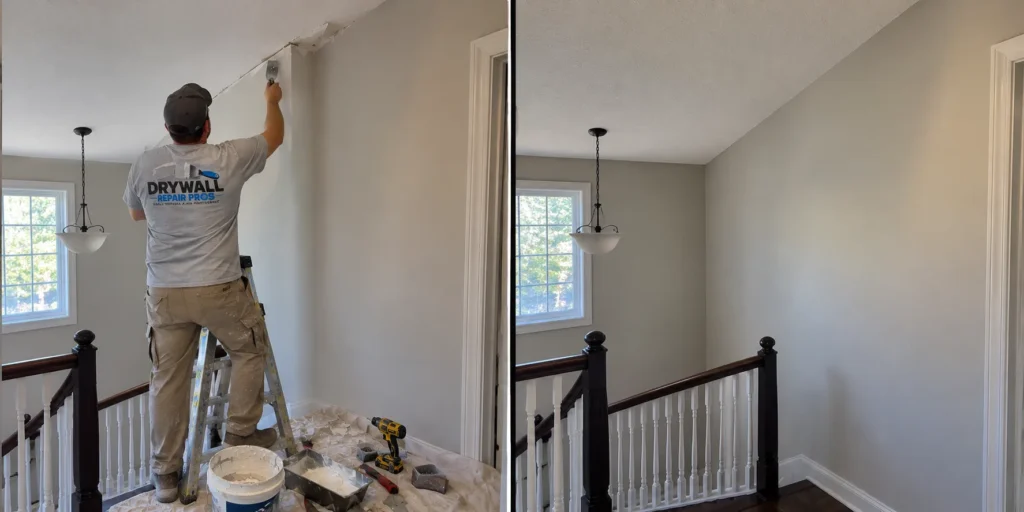
The terms drywall seam and drywall joint are often used interchangeably. Joint problems can develop because of building movement, seasonal expansion and contraction, loose drywall, inadequate fastening, failed reinforcement, poor original finishing, excess compound, moisture damage, framing movement, or previous repairs.
The repair method depends on what is actually failing beneath the visible line.
Visible Drywall Seam Repair
A visible seam may run across a wall or ceiling as a raised line, cracked joint, shadowed ridge, depression, discolored strip, or texture change.
Lighting can make a structurally sound but poorly finished joint much more noticeable. Long walls, smooth ceilings, large windows, and strong side lighting often reveal surface differences that were less obvious before painting.
Cracked & Separated Drywall Joints
Cracked Drywall Seams
Cracks along drywall joints usually follow a straight or relatively straight line. Common causes include failed reinforcement, loose panels, framing movement, poor joint preparation, seasonal movement, or previous repair failure.
A joint that keeps opening may need to be stabilized, reinforced, and refinished instead of simply filled. For broad crack-related problems, see Drywall Crack Repair. For ceiling-specific crack problems, see Ceiling Crack Repair.
Separated Drywall Seams
A seam can separate when the joint loses stability. Signs may include a widening line, loose panel edges, visible movement, cracked compound, failed tape, or a gap between sheets.
If the drywall itself is moving, it may need to be secured before the joint is rebuilt. Filling a moving seam without addressing the movement can allow the problem to return.
Want Pricing for a Repair Like This?
Most visible repairs can start with photos. Send the property address, a short description, and up to six images.
Raised, Sunken & Uneven Drywall Joints
Raised Drywall Seams
A raised seam creates a ridge or hump above the surrounding surface. Possible causes include excessive compound, raised tape, poor feathering, misaligned panel edges, swelling, fastening problems, or previous repair buildup.
Raised joints can become especially visible under strong side lighting. Repair may require reducing buildup, correcting the joint condition, and refinishing a wider area.
Sunken Drywall Joints
A sunken joint appears as a depression rather than a ridge. It may result from insufficient compound, recessed panel edges, shrinkage, over-sanding, poor finishing, or uneven drywall installation.
Controlled additional finishing can often bring the joint into a smoother plane without creating a new hump.
Uneven Drywall Transitions
Some joints combine high and low areas, visible tape lines, compound buildup, narrow feathering, or misaligned drywall edges. Wider feathering is often needed to create a more gradual visual transition.
When Drywall Tape Causes a Seam or Joint Failure
Tape is part of the drywall joint system, so seam problems may involve bubbling, lifting, peeling, wrinkling, cracking, or visible tape edges.
Loose tape generally should not be buried under additional compound. The failed area needs to be corrected before the surface is refinished. For broader tape-specific problems, see Drywall Tape Repair.
Wall vs. Ceiling Seam Repair
Wall Seam Repair
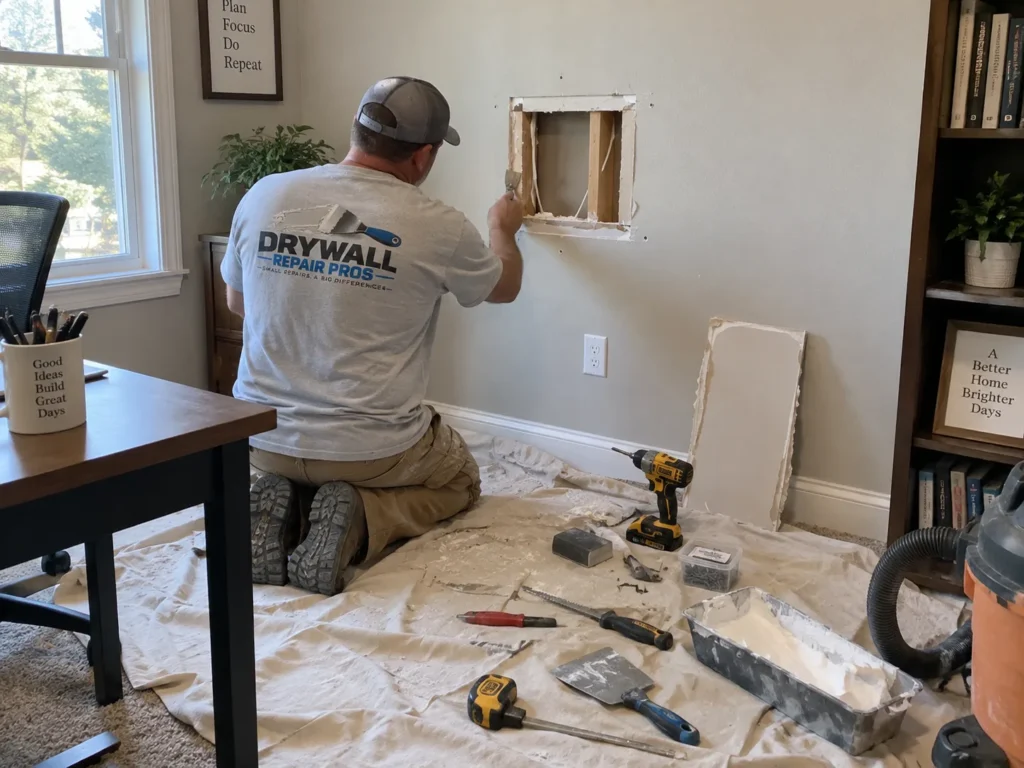
Wall seams may become visible as straight cracks, ridges, depressions, loose tape, or uneven compound. Movement around framing, poor finishing, previous repairs, or loose drywall can all contribute.
Ceiling Seam Repair
Ceiling seams are often more noticeable because overhead lighting, windows, and long sightlines cast shadows across small surface differences. Straight cracks, visible joints, raised seams, and recurring joint failures should be evaluated for movement before cosmetic finishing.
For cracks where the primary issue is the crack itself rather than the joint system, see Ceiling Crack Repair.
Horizontal & Vertical Drywall Seam Problems
Horizontal and vertical seams can both develop visible cracks, ridges, depressions, loose tape, or movement. The orientation of the joint matters less than whether the drywall is stable, the joint is properly reinforced, and the finished surface can be blended into the surrounding area.
Long horizontal joints may be especially visible under side lighting, while vertical seams can become obvious when adjacent panels are misaligned or compound buildup is uneven.
Joints at Walls, Ceilings & Inside Corners
The transition where a wall meets a ceiling and inside corners are also drywall joint systems. These areas may crack or separate because of seasonal movement, framing movement, truss movement, failed corner tape, expansion and contraction, or previous repairs.
When the issue is specifically a damaged corner or corner bead rather than a flat joint, see Drywall Corner & Corner Bead Repair.
Joint Problems Near Doors & Windows
Doors, windows, and wide framed openings can concentrate movement in nearby drywall. Cracks or visible joints may develop above or beside openings when framing shifts, drywall moves, or previous repairs are weak.
The surrounding area should be evaluated to determine whether the problem is isolated to finishing or whether movement is contributing.
Seam & Joint Problems After Remodeling or Repair Work
New drywall often has to connect to existing drywall during remodeling, wall removal, plumbing access, electrical work, or other repairs. These transition joints can be difficult when old and new materials differ slightly, framing is not perfectly aligned, backing is weak, or new joints land in challenging locations.
Long repair strips left after wall removal may crack or remain visible if the joint was not reinforced well or the finish was too narrow. Patch seams around plumbing or electrical openings can also fail if backing, fastening, tape, or finishing were inadequate.
For broader project-specific work, see Drywall Repair After Remodeling, Drywall Repair After Plumbing Work, or Drywall Repair After Electrical Work.
Drywall Seam Problems After Water Damage
Moisture can weaken drywall joints, loosen tape, soften compound, raise seams, cause discoloration, and contribute to cracking. The moisture source should be corrected and the material should be appropriately dry before the joint is rebuilt.
For broader water-damage problems, see Water-Damaged Drywall Repair or Water-Damaged Ceiling Repair.
Recurring & Previously Repaired Drywall Seams
A seam that repeatedly cracks or remains visible after previous repair deserves more attention than another layer of compound.
Common previous-repair problems include thick buildup, visible tape, raised joints, narrow feathering, sanding marks, texture mismatch, and recurring cracks. Continued movement, loose drywall, inadequate fastening, failed tape, poor joint placement, or a weak previous repair can all cause the same line to return.
In some cases, part of the old repair should be removed and rebuilt rather than covered again.
Why Can I See Drywall Seams Through Paint?
Paint does not flatten a drywall joint. In fact, paint and room lighting can make uneven seams more noticeable.
Common reasons a seam shows through paint include side lighting, sheen differences, raised compound, narrow feathering, texture changes, poor sanding, sunken joints, or different surface porosity across the repaired area.
The joint should be stable and properly prepared before final painting.
Repairing Seams on Smooth & Textured Surfaces
Smooth Walls & Ceilings
Smooth surfaces reveal small differences in flatness, compound thickness, sanding, and feathering. A repair that is too narrow can leave a visible hump even when the crack itself is gone.
Textured Walls & Ceilings
Textured surfaces require two separate steps: first repair and finish the joint, then restore the surrounding texture. Texture should not be used to hide a moving or poorly finished seam.
For texture-focused work, see Drywall Texture Repair & Matching or Ceiling Texture Repair & Matching.
Drywall Seam Repair Before Painting or Selling
Cracked seams, raised joints, visible tape, previous patch outlines, and uneven wall or ceiling surfaces should generally be corrected before final painting.
These defects can become more noticeable after fresh paint and may draw attention during home showings or listing photography. Repairing the joint first creates a better foundation for the final finish.
Drywall Seam Repair for Rental Properties
Rental properties may develop joint problems from normal movement, previous repairs, plumbing access, electrical work, tenant damage, or turnover patching.
Landlords and property managers can send photos of multiple seam defects together with approximate lengths, wall or ceiling location, whether the joints are cracked or raised, and whether previous repairs are present. Most visible seam and joint problems can be reviewed remotely for initial pricing.
Commercial Drywall Seam & Joint Repair
Commercial interiors may develop visible joints after tenant improvements, remodeling, equipment changes, building movement, plumbing or electrical access, and previous repairs.
Seam defects can be especially noticeable in offices, retail spaces, hallways, and other finished interiors with long sightlines and bright lighting.
Drywall Seam & Joint Repair in Cedar Rapids
Drywall Repair Pros provides drywall seam and joint repair throughout Cedar Rapids and surrounding communities. Common projects include cracked drywall seams, visible drywall joints, raised or sunken seams, separated joints, wall seams, ceiling seams, uneven transitions, and recurring drywall seam cracks.
Drywall Seam & Joint Repair in Iowa City
We provide drywall seam and joint repair throughout Iowa City and surrounding communities for homeowners, landlords, property managers, rental properties, apartments, and commercial interiors. Services include visible seam repair, cracked joint repair, raised seam repair, wall and ceiling joint repair, uneven drywall transitions, and recurring seam problems.
Our Drywall Seam & Joint Repair Process
Start With Photos and Joint Details
Send a close-up photo, a wider wall or ceiling photo, approximate seam length, whether the joint is cracked, raised, sunken, separated, or showing tape, whether the area has been repaired before, whether there has been water damage, and whether the surface is smooth or textured.
Identify Why the Joint Failed. We evaluate the joint pattern, tape condition, surface height, drywall movement, previous repairs, and moisture history.
Remove Failed Material and Secure Loose Drywall. Loose compound, failed reinforcement, and unstable material are removed as needed, and moving drywall may be secured before refinishing.
Repair or Reinforce the Joint. Failed tape or joint reinforcement is corrected and the joint is rebuilt appropriately.
Rebuild the Surface in Controlled Layers. Joint compound is applied without creating unnecessary buildup.
Feather and Sand the Repair. The finished area is widened gradually to reduce visible ridges, depressions, and transitions.
Restore Texture and Prepare the Surface. Smooth or textured walls and ceilings are prepared for the appropriate final finish.
Can a Drywall Seam Be Permanently Repaired?
Often, yes. A durable repair is more likely when loose panels are secured, failed joint reinforcement is corrected, the seam is properly prepared, movement is limited, and finishing is completed correctly.
If building or framing movement continues, some joints can crack again even after a properly completed repair.
Does a Visible Drywall Seam Mean the Wall Is Failing?
Usually not. A visible seam often indicates a finishing, tape, compound, or joint problem rather than a major wall failure.
A seam that is widening, visibly moving, or appearing along with other significant building changes may deserve additional evaluation before cosmetic repair.
Frequently Asked Questions About Drywall Seam & Joint Repair
Can cracked drywall seams be repaired?
Yes. The joint may need to be stabilized, reinforced, and refinished depending on why it cracked.
Why can I see drywall seams through the paint?
Visible seams can result from raised compound, narrow feathering, sanding problems, texture differences, sheen, surface porosity, or strong side lighting.
Why do drywall joints crack?
Common causes include movement, loose drywall, failed reinforcement, poor finishing, framing movement, and previous repair failure.
Can a separated drywall seam be repaired?
Yes. If the drywall is moving, it may need to be secured before the joint is rebuilt.
Can a raised drywall seam be fixed?
Often, yes. The repair may involve reducing excess buildup, correcting the joint condition, and refinishing the area more broadly.
Can a sunken drywall joint be repaired?
Yes. Controlled additional finishing can often bring the joint into a smoother plane.
Why is drywall tape showing at the seam?
Tape can become visible because it is loose, raised, poorly covered, affected by movement, or exposed by failed compound.
Can ceiling seams be repaired?
Yes. Ceiling joints can be repaired much like wall joints, although overhead lighting often makes finishing more visually demanding.
Can wall-to-ceiling joint cracks be repaired?
Yes. The repair depends on whether the problem is joint reinforcement failure, loose drywall, or continued framing movement.
Can old drywall seam repairs be redone?
Yes. Thick, cracked, uneven, or poorly feathered previous repairs can often be partially removed and rebuilt.
Why does the same drywall seam keep cracking?
Recurring cracks usually indicate continued movement, loose drywall, failed reinforcement, inadequate fastening, or a weak previous repair.
Can drywall seam and joint repair be quoted from photos?
Usually. Clear close-up and wider photos, approximate seam length, wall or ceiling location, joint condition, previous repair history, and surface texture can often provide enough information for initial pricing.
How much does drywall seam repair cost?
Cost depends on the length of the joint, wall or ceiling location, height, movement, tape or reinforcement failure, surface texture, accessibility, and previous repair work. See our Drywall Repair Cost & Pricing Guide for broader pricing information.
Get a Fast Drywall Seam & Joint Repair Quote
For most visible seam and joint problems, you can start the pricing process without waiting for a separate on-site estimate. Send clear photos and basic project details so we can review the joint pattern and surrounding surface.
For the fastest review, include:
- A close-up photo of the seam or joint
- A wider photo showing its location
- Approximate joint length
- Whether the joint is on a wall or ceiling
- Whether it is cracked, raised, sunken, separated, or uneven
- Whether tape is visible, loose, or bubbling
- Whether the area has been repaired before
- Whether there has been water damage
- Whether the surface is smooth or textured
- Photos of additional seam, crack, or patch repairs you want included
In many cases, that is enough information for same-day initial pricing. Drywall Repair Pros serves Cedar Rapids, Iowa City, and surrounding communities.